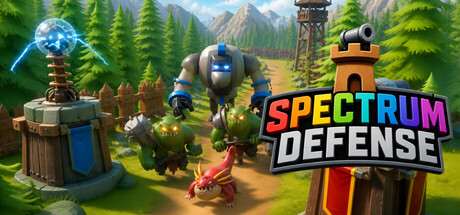
Use the seven colors of the spectrum in a classic tower defense, with a catch! Every run has randomized enemies, way-points and map layout. Colors affect the towers' damage, based on the randomly generated Color Table. Upgrade your towers by equipping modules. Mix and match to defeat your enemies!
Spectrum Defense 在线人数与 Steam 图表
实时
在线人数024 小时 —
24 小时峰值玩家0今日最高样本
30 天峰值玩家0平均 —
历史峰值玩家0自开始追踪以来
30 天游玩时长—估算值
Steam 图表 · 30 天在线人数等待采样
正在收集每日样本尚未存储该游戏的每日样本。积累最初几天的历史数据后,曲线就会出现。
24 小时—7 天—趋势持平
评测4 篇评测
50.0%4 user reviews
2 篇好评2 篇差评
推荐数—评分
媒体
12 张图片
游戏详情
关于这款游戏
游戏
发行日期2026年7月28日2 个月前发行
开发者FrostSnake发行商FrostSnake类型免费开玩策略独立
—成就—DLC
关于这款游戏
玩家数更新于 9月19日 05:02 UTC · 商店数据更新于 9月22日 20:38 UTC · 来源:SteamWebAPI
Classic Tower Defense
Spectrum Defense is a classic tower defense, which utilizes all basic aspects of the tower defense genre;
Build towers, defend against waves of enemies, upgrade towers.
Randomness
Randomness is the main theme of the game. All of the mechanics in the game are affected by randomness.
In every run, the game will generate new layout, which includes:
- Way-points (Paths).
- Map props (trees, theme).
- Color Interaction Table (For damage/bounty outputs).
- Enemy stats/count (and other chances).
- Modifiers' proc chances.
The configuration of a run can be saved and shared in the main menu.
Towers
There are multiple types of towers with different features. Some can shoot, some can only buff other towers, or de-buff enemies.
Upgrading is done via equipping "Modules". These modules can be stacked, but towers have limited module slots.
Color Interaction Table
Towers have base damage (for each tower type). The color interaction table defines the relationship between colors in terms of damage/bounty, and the cost of building.
The game utilizes the seven colors of the spectrum in such a way that each color has a value, which is then used to scale the damage output from towers and the bounty gained from destroying enemies. The relationship is defined by Source Color vs Target Color (e.g. Red Tower attacking Green Enemy). This results in each of the seven colors having one set of seven different percentages (scales) for damage output and another set of seven percentages for bounty gain.
The cost of building is also affected by the building color strength, whether it's a strong color (expensive), or a weak color (cheap).

 免费开玩排名 #127264