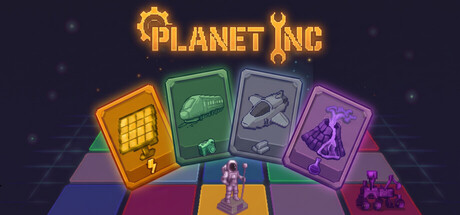
Serve as an executive of a planetary development corporation. Place buildings on a 4x4 grid and drive the planet's value to target. Rules that shift with every planet, a hard turn limit, and synergy between cards and corporate assets. A strategy roguelike where placement puzzles meet deckbuilding.
Planet INC 在线人数与 Steam 图表
实时
在线人数—24 小时 —
24 小时峰值玩家0今日最高样本
30 天峰值玩家0平均 —
历史峰值玩家0自开始追踪以来
30 天游玩时长—估算值
Steam 图表 · 30 天在线人数等待采样
正在收集每日样本尚未存储该游戏的每日样本。积累最初几天的历史数据后,曲线就会出现。
24 小时—7 天—趋势持平
评测0 篇评测
—No user reviews
0 篇好评0 篇差评
推荐数—
媒体
6 张图片
游戏详情
关于这款游戏
游戏
发行日期—发行日期未公布
开发者Saeron发行商Saeron类型策略独立
—成就1DLC5011540App ID
关于这款游戏
玩家数更新于 — · 商店数据更新于 9月23日 01:48 UTC · 来源:SteamWebAPI
Head office only sends the target number. How you hit it is your problem.
Sixteen tiles of land on an unfamiliar planet have just been assigned to you. The deadline
is fixed, and how this world actually operates is something you'll have to find out the
hard way. Push corporate value to the target and you move on to the next planet.
Fall short, and that's where it ends.
🗺️ Sixteen Tiles Is All You Get
Place buildings of the same theme side by side and adjacency bonuses kick in. Lining up
two tiles is something anyone can do. The real problem comes after. A building that only
performs at full capacity on volcanic terrain might reach your hand at any moment — or
never. Do you hold those two tiles empty and wait for it, or fill them now and lock in a
bonus you can count on? Sixteen tiles is far tighter than it sounds.
🔥 Burn It or Build It — The Incineration System
Every card carries two values: what it's worth placed, and what it's worth burned.
Incinerate a card from your hand and it converts straight into action resources. The card
you torched just to fill one more tile this turn may well be the final piece of the combo
you were three turns from completing. The harder a card is to burn, the more certain it is
that the moment will come when you have to.
🪐 Change the Planet, Change the Answer
Terrain layouts differ from planet to planet, and so does the way you score. The first thing
to read is what actually pays here.
And planets don't sit still. Output on a certain resource can spike and carry you toward the
target ahead of schedule — or a flood can roll in and shut your buildings down, or a volcano
can erupt and wipe out what you spent the whole run building. The strategy that solved the
last planet flawlessly will be the worst possible move on the next one.
⚙️ Production Lines and Corporate Assets
A building doesn't become value the moment it goes up. You produce resources, use those
resources to complete the building, and only then does it post to the books. Which line to
run first and which to push back — that decision is in a constant fight with the turns you
have left.
Then corporate assets bend the whole flow out of shape. Some raise output. Others tear up
how scoring works entirely. Once cards, assets, and placement start meshing like gears, a
target that looked out of reach suddenly starts looking trivial.
📋 Key Features
Placement puzzles on a 4x4, sixteen-tile grid
A deck and asset combination rebuilt from scratch every run
Terrain and rules that change completely from planet to planet
Place it or burn it — every card offers two options
Fail and you start over. The next run is a completely different planet

 未发行
未发行