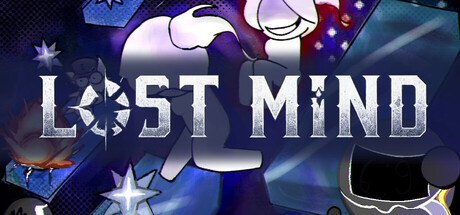
Lost Mind is a psychological roguelite set inside Ashley’s fractured mind. Explore procedural worlds, collect stars, escape collapsing maps, and face symbolic enemies born from trauma, paranoia, and depression. Every death means she got lost again.
Lost Mind: liczba graczy i Steam charts
na żywo
Liczba graczy—— w 24 h
Szczyt graczy 24 h0Najwyższy pomiar dzisiaj
Szczyt graczy 30 dni0Śr. —
Rekord graczy0Od początku śledzenia
Godziny gry 30 dni—Łączny czas gry
Wykres Steam · liczba graczy 30 dniczekamy na pomiary
Zbieramy dzienne pomiaryDla tej gry nie ma jeszcze dziennych pomiarów. Wykres pojawi się, gdy zbierzemy pierwsze dni historii.
Wygoda i dźwiękCamera ComfortCustom Volume ControlsStereo Sound
Wymagania systemowe
MinimalneZalecaneSystemWindows 10to samoProcesor—AMD FX(tm)-8320 Eight-Core Processor, Intel Core i7-4770Karta graficznaIntel(R) HD Graphics 4000 (32 MB)NVIDIA GeForce GTX 1660, AMD Radeon RX 5600 XTPamięć8 GB RAM16 GB RAMMiejsce na dysku900 MB available spaceto samo
O grze Lost Mind
Warning
Lost Mind contains flashing lights, themes that may be sensitive to some players (depression, mild mentions of suicide), and movement/distortion of objects and camera.
If ANY of these cause discomfort, please do not play.
What is Lost Mind?
The world you're playing in is not real. It never was.
Every platform, every void, every enemy — they all exist inside the mind of a girl named Ashley, fighting battles no one else can see. Her story is yours to piece together. We won't tell you what happened. We think you already know.
Lost Mind is a collectathon-based roguelite set across procedurally generated maps of floating glass platforms suspended in a cosmic void. Each run is a new attempt. Each death means one thing:
She got lost again.
How it plays
Collect all the stars scattered across the map. When the last one is picked up, a door of light appears at the main platform — your way out, your next step forward.
But the moment that door opens, the world starts to collapse. Platforms fall. The map crumbles. You have seconds to reach safety before everything she built falls apart beneath her feet.
As you progress:
- Maps grow larger through procedural generation
- More platforms, more stars, more chaos
Between levels — intermissions
Between each level, the game pauses for a moment of choice. These Intermissions cycle in a pattern:
- 1st: Choose a new enemy to add to your run
- 2nd: Choose an enemy + a Curse + an Upgrade
- 3rd: Choose an enemy + 3 Upgrades
Every choice you make shapes the run — and shapes how hard she has to fight.
Upgrades
Upgrades improve Ashley's survivability, mobility, or unlock entirely new mechanics. Some examples:
- Extra hits — absorb more damage before going down
- Mobility upgrades — move faster, jump farther, react quicker
- The Bible — removes a random Curse from your inventory every 6 levels. A small mercy in a merciless run.
The enemies
They are not monsters. They are her.
- Laziness — The comfort of giving up.
- Gloob — Shame.
- Robson — Running from her problems.
- Train — Time passing. Childhood fading.
- Paranoia — What if. What if. What if.
- Maskarada — The smile she wore for everyone.
- Violence — Bullying. Verbal, physical, virtual...
- And more!
Curses
Curses make the world harder — or make her harder to control. They're tied to the enemies that inspired them, and to the parts of herself she's still fighting.
- Low Self-Esteem — Tied to Doppel. She laughs at you. You start believing her.
- Fitness / Greediness / Sleepiness / Halfness — Tied to Laziness. Four ways to slow you down... or... speed you up?
- Quick Blur — Tied to Paranoia. "Is it... Following me? Is it running faster!?"
- Slippery — Some platforms lose all friction. Momentum becomes your enemy.
- Faster Chaos — The collapse accelerates the moment the door opens. No grace period.
- Hot Stuff — Using your ability fills a heat meter. Max heat kills you instantly.
- Console — Your field of vision shrinks to a tiny portable screen. Nostalgia has a price.
- Inclined Platforms — Nothing stays flat. Nothing stays still.
- And much much more!
Did you know?
- The stars represent fragments of hope. They don't come to her — she has to find every single one before anything changes.
- The door of light collapsing the world around it isn't just a difficulty mechanic. The moment she finds a way out, everything gets harder. That's intentional.
- The soundtrack was designed to feel detached from the lore on purpose — so players who just want to run can vibe. But listen carefully as the levels stack up.
- Curses exist because sometimes we choose our own burdens, convinced they make us stronger.
Lost Mind is currently a work in progress. The mind is still being built and rebuilt.
Najczęstsze pytania
Steam nie podaje obecnie ceny gry Lost Mind.
Gra Lost Mind jeszcze się nie ukazała. Data premiery nie została ogłoszona.
Minimalne: Windows 10, Intel(R) HD Graphics 4000 (32 MB), 8 GB RAM. Karta wymagań powyżej porównuje wymagania minimalne i zalecane dla każdej platformy.
Według Steama gra Lost Mind wymaga 900 MB wolnego miejsca na dysku.
Ta gra nie ma jeszcze recenzji na Steamie.
Nie — Steam nie podaje polskiej wersji językowej dla gry Lost Mind. Łącznie Steam podaje 1 język, w tym 1 z pełnym audio.
Nie — według Steama gra Lost Mind jest przeznaczona dla jednego gracza.
Steam charts gry Lost Mind na SteamStatistics pokazują aktualną liczbę graczy oraz wykresy z 24 godzin, 7 i 30 dni, odświeżane co najmniej co dziesięć minut.
Na Steamie gra Lost Mind działa w systemach: Windows. Brak informacji o wsparciu dla kontrolerów.
Klasyfikacja wiekowa gry Lost Mind: DEJUS 16 i IGRS 13.
Lost Mind: cena, data premiery, liczba graczy i statystyki

 Niewydana