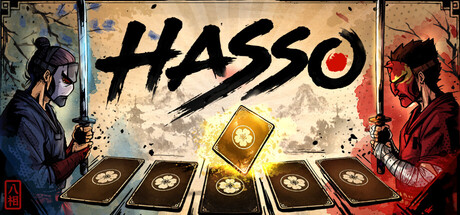
A single-player samurai card game where you don't collect cards, you learn techniques. Each turn you build a chain of blades and decide when to stop; between duels you choose what you learn, which paths you prove and which katana you forge, until the style is yours.
HASSO: liczba graczy i Steam charts
na żywo
Liczba graczy—— w 24 h
Szczyt graczy 24 h0Najwyższy pomiar dzisiaj
Szczyt graczy 30 dni0Śr. —
Rekord graczy0Od początku śledzenia
Godziny gry 30 dni—Łączny czas gry
Wykres Steam · liczba graczy 30 dniczekamy na pomiary
Zbieramy dzienne pomiaryDla tej gry nie ma jeszcze dziennych pomiarów. Wykres pojawi się, gdy zbierzemy pierwsze dni historii.
Wygoda i dźwiękCustom Volume ControlsMouse Only OptionPlayable without Timed Input
WięcejPlayable At Your Own Pace
Wymagania systemowe
MinimalneZalecaneSystemWindows 10 64-bitWindows 11 64-bitProcesorIntel Core i3-4340 / AMD FX-6300i5-8400 / Ryzen 5 2600Karta graficznaDirectX 11 GPU with 1 GB VRAM (Intel HD 520 or better)GTX 1050 Ti / RX 560Pamięć4096 MB RAM8192 MB RAMMiejsce na dysku2048 MB available space4096 MB available space
O grze HASSO
You don't build a deck: you build a style
You walk the dojos learning techniques. What you choose to learn —and what you choose to let pass— is what ends up defining you: how you open, how far you chain, what you do when your edge is broken. At the end of the Path you don't have a list of cards: you have a way of fighting.One question, every turn
You don't play a card: you build a chain. Every technique has an opening and an ending, and it only links to the technique that fits. You lay them face down, and when both duelists are done, the two chains meet position by position.
The longer the chain, the more damage it carries. But every position is a clash, and a technique that loses its clash adds nothing. You build the chain. Your opponent decides how much of it lands.The edge, the feint and the guard
Attack beats Maneuver. Maneuver beats Defense. Defense beats Attack.
When two techniques of the same type meet, no number saves you: the position goes to whoever holds the initiative — and if nobody holds it, both cancel out. Win a position and the initiative is yours on the next one. The duel has momentum, and taking it from your opponent is half the craft.Two schools, two stretches of the wheel
- Kurenai River — water. Its techniques live in the low values and link into each other readily: the river doesn't strike, it drags.
- Mount Okuribi — ember. Its techniques live in the high values and open harder: fire doesn't flow, it catches.
The two schools overlap on only a handful of values. Mixing them means fewer techniques that link — and a deck built on purpose to bridge the gap.After every duel, you choose
No opponent hands you a prize: they offer options and force you to keep only a few. Techniques for your repertoire or materials for your steel, and they rarely both fit. A style is defined as much by what it takes in as by what it lets pass.Paths
Each school keeps combinations that only work if you build your deck for them: a precise pattern of edges and feints that pays off when it closes. The easy ones you'll see in almost every duel. The masterful ones will make you build the whole deck around them. They are the philosophy you try to prove inside the fight.Your katana is not an ornament
The pieces you gather matter for what they share: their region, their material, their element. The forge asks for a specific commission, and you decide what you hand over and what you keep. Like matching affinities, but with steel.The Dojo Path
A campaign across regions where you choose your opponent at each stage, and each of them fights their own way: the one who drags, the one who holds, and the one who makes you finish fast.And when the Path is done
- Free Duel — your decks against any rival.
- Daily Challenge — a fixed duel, the same one for everybody, every day.
What it is, and what it isn't
- A single-player game, paid and complete. You buy it once.
- No microtransactions, no passes, no energy. Not now, not later.
- No always-online requirement.
Najczęstsze pytania
Steam nie podaje obecnie ceny gry HASSO.
Gra HASSO jeszcze się nie ukazała. Planowana premiera: Q1 2027.
Minimalne: Windows 10 64-bit, Intel Core i3-4340 / AMD FX-6300, DirectX 11 GPU with 1 GB VRAM (Intel HD 520 or better), 4096 MB RAM. Karta wymagań powyżej porównuje wymagania minimalne i zalecane dla każdej platformy.
Według Steama gra HASSO wymaga 2048 MB wolnego miejsca na dysku. Wymagania zalecane podają 4096 MB.
Ta gra nie ma jeszcze recenzji na Steamie.
Nie — Steam nie podaje polskiej wersji językowej dla gry HASSO. Łącznie Steam podaje 10 języków, ale żaden nie ma pełnego audio.
Nie — według Steama gra HASSO jest przeznaczona dla jednego gracza.
Steam charts gry HASSO na SteamStatistics pokazują aktualną liczbę graczy oraz wykresy z 24 godzin, 7 i 30 dni, odświeżane co najmniej co dziesięć minut.
Na Steamie gra HASSO działa w systemach: Windows. Brak informacji o wsparciu dla kontrolerów.
Klasyfikacja wiekowa gry HASSO: DEJUS 10 i IGRS 13.
HASSO: cena, data premiery, liczba graczy i statystyki

 Niewydana