Tietoa pelistä Peregon
A station the war runs through
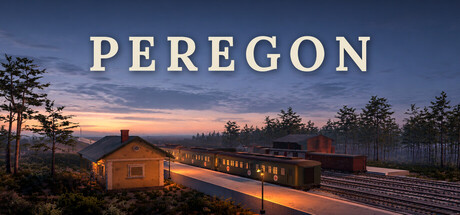
1915. A small station on the St. Petersburg–Warsaw Railway, a few hours from the front. There are no battles here and no poster heroes. There is a wooden station house, a water tower, a coal yard, a handful of tracks, and a telegraph that never falls silent.
You are the duty officer. Troop trains pass through heading west, hospital trains heading east, along with coal and fodder trains and wagons of refugees who don't know where they're being taken. Every train has to be received, serviced and sent off on time. You almost never manage it for all of them at once.
Peregon is a calm-paced but tense game about dispatching on the home front of the First World War. About decisions with no good option, and the people who made them every shift.
Every track has a purpose
The station is small, and every track has its role. Track 1 has the passenger platform, where the wounded get off and evacuees get on. Track 2 is for transit, so trains can pass straight through. Track 5 has the water tower, the coal yard and the unloading area, for trains that need servicing or bring supplies for the station.
A train won't accept the wrong track: a hospital train needs a platform, and an engine without water needs the tower. Some tracks are closed and can be opened later. While one train leaves through the station throat, the next waits at the entrance signal, so the order you receive trains matters as much as where you send them.
- Route trains to tracks with the right facilities.
- Let transit trains through without blocking the platform or the yard.
- Watch the station throat: two trains can't pass through it at once.
- Keep a reserve track for a train you'll have to hold back.
Timetable and crews
The duty officer's main tool is the timetable board. It shows every train of the shift: who has arrived, who is on the way, who has no track yet. You can drag cards onto tracks ahead of time, before the train even appears on the horizon, and set the order of work for the crew.
The station has one crew and plenty of work: watering, coaling, unloading, servicing. While it's busy with one train, the rest wait. The board shows a forecast: when each train arrives, when it's ready and when it departs. One bad swap, and delays roll through the whole shift.
Shift rules let you decide what happens to a train you haven't assigned in time, whether trains may skip the queue, and what to do with a train that is far too late.
Water, coal, medicine, food
Every train needs something. A troop train heading for the front needs water and coal. A hospital train needs medicine. Refugees need food. It all comes out of the station's stocks, and the stocks run out.
The only way to refill them is with what supply trains bring in, and only once they've been unloaded. Sometimes it pays to service the supply train first and make the others wait. Sometimes there isn't enough for anyone, and a train has to move on unserviced. That choice counts toward the end of the shift too.
- Four resources: water, coal, medicine and food.
- Deliveries arrive by train and become available after unloading.
- The timetable warns you in advance who will run short.
Deadlines you can't miss
Many trains have a departure deadline. The station can survive a few minutes' delay, but every late train lowers your shift result, and one held too long will leave without service. Hospital trains carrying the wounded can't wait at all.
Priority trains run out of turn. They can be announced mid-shift, and then you have to clear a track, move the crew and rework the whole timetable. Holding a priority train is a serious offence. // planned: priority trains
Speed up time when the station is quiet, and pause when everything is on fire. While paused, you can still give orders: assign tracks, reorder the crew queue, get the station ready for the next train.
The war on paper
You won't see a single battle. The war reaches the station in other ways: short arrival telegrams, orders from the railway administration, wagon numbers, letters, people on the platform. At first the troop trains run west. Later, more and more of them come back east.
The station log keeps every telegram of the shift: the time, the requirements, the departure deadline. Over time those dry lines add up to the story of the station and everyone who passed through it.
Single-track sections and the token
A "peregon" is the stretch of line between two stations. On many lines it was single-track: one track for both directions. To stop two trains meeting head-on, a train could only leave once the station held the token for that section.
While the neighbouring station has the token, your trains wait. While you have it, theirs do. A mistake on the single track costs more than any delay, and you'll have to arrange it with your neighbours by telegraph.
1914–1917
Shifts follow the years of the war. Summer 1914 brings mobilisation and endless troop trains heading west. 1915 brings the wounded, the refugees and the retreat, as the front comes right up to the station. After that come shortages, exhaustion and breakdowns no one can hide anymore.
The station changes with the war: new tracks and new orders, different trains and different people. Closer to the front come blackouts and air raids, and the home front stops being safe.
Based on a real railway
Peregon is inspired by the St. Petersburg–Warsaw Railway and the Vilna region, one of the main lines that supplied the Russian Empire's North-Western Front. Hospital trains, priority trains, the token system on single-track sections, the clipped language of telegraph orders: all of it really existed.
We try to capture not only how the station looked but how it worked: timetables, the duty officer's job, the rules of traffic. Still, Peregon is a game, not a textbook. The challenge is honest, and you don't need to know any history to enjoy it.
The station is still being built
Peregon is in active development. Right now we're building the first shift: tracks, timetable, crew and supplies. Next on the list are priority trains, single-track sections with the token, and shifts across the war years.
The demo will come out on Steam. Wishlist Peregon to hear about it first.

 Julkaisematon