關於 MALEBOLGE
The complete descent through Dante’s Inferno, from the dark wood to the frozen lake at the bottom. Every place in it is a place in the poem, and nothing has been invented to join them up.
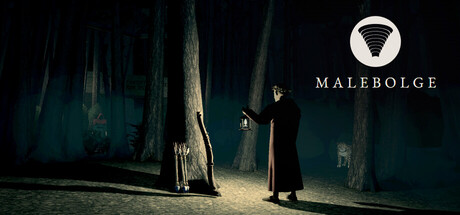
You are Dante, alive in the body, carrying an oil lamp, because you have mortal eyes and the dead have no use for light. Oil runs out. Nothing down here waits for you to be ready.
And nothing down here knows where you are. What hunts you follows the trace a living body leaves: weight, breath, warmth, moved air. Stand still in the wrong place and it finds you anyway. Move well and it loses you.
Six chapters, nine circles. The poem’s Hell is a funnel, and the deeper you go the heavier the sin.
- Hide from the nose, not the eye. Nothing can see where you are: every creature reads the smell your body leaves as it settles, spreads and drifts on the wind. Running doubles it. Stone stops it.
- Speak, and Dante speaks. With a microphone, if you want one, your voice becomes his, in the wordless throat of the damned, and it is breath like any other: the beasts smell it. Some places are crossed in total silence.
- Ration the light. Oil lets you see while it burns and gets you found while you carry it. Run dry and you are blind, but odourless.
- Nothing dies. The damned are already dead. Every weapon has one verb: the arrow pins, the Miserere scatters. What you buy is a few seconds of clear road, never an end.
- Carry the names out. Every soul that stops you wants its name carried back among the living. Promise it, tear it out by force or get it by lying: each weighs differently in the book, and a heavy book smells of the way out.
- Three hearts. From the gate down, a light blow costs half a heart, a heavy one a whole heart; lose them all and you fall back to the last step you closed. They never come back on their own: the few apples down here give one back.
- Read it like a manuscript. Look at anything and the game tells you what it is and what it means in the poem. No narrator, no cutscenes: reading a loose sheet burns oil.
- Voices without words. The damned speak with a synthesized throat: syllables that say nothing, with the pitch, tremor and breath of a person.
Rendered at low resolution, with vertices that snap, 15-bit colour and dithering, like a console game from the late nineties. The opening verses scroll over Gustave Doré’s 1861 engravings.
Italian and English. Dante’s verses stay in the original Italian in both, the way he wrote them.

 未發行
未發行