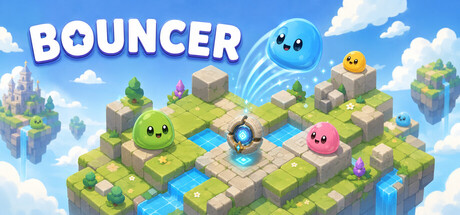
Bouncer is a compact two-player strategy game about predicting your opponent, controlling space, and surviving the collision. Choose your moves at the same time, resolve them together, and use the game's bounce rules to outmaneuver your rival and hold their base.
Bouncer 上線人數與 Steam 圖表
即時
玩家人數—24 小時 —
24 小時峰值玩家0今日最高樣本
30 天峰值玩家0平均 —
歷史峰值玩家0自開始追蹤以來
30 天遊玩時數—估計值
Steam 圖表 · 30 天玩家人數等待取樣中
正在收集每日樣本此遊戲尚未儲存任何每日樣本。累積最初幾天的歷史資料後,曲線就會出現。
24 小時—7 天—趨勢持平
評論0 篇評論
—No user reviews
0 篇好評0 篇負評
推薦數—
媒體
5 張圖片
遊戲資訊
關於此遊戲
遊戲
發行日期—發行日期未公布
開發人員Wireframe Studios發行商Wireframe Studios類型策略獨立休閒
—成就—DLC
關於此遊戲
玩家數更新於 — · 商店資料更新於 9月23日 上午01:50 UTC · 來源:SteamWebAPI
最低配備建議配備作業系統Windows 10 64-bit—處理器Dual-core 2.0 GHz or equivalent—顯示卡DirectX 11 compatible graphics—記憶體4 GB RAM—儲存空間500 MB available space—
關於 Bouncer
Plan at the same time. Resolve together. Survive the bounce.
Bouncer is a compact competitive strategy game built around simultaneous decisions. Each player chooses a move, then both moves resolve together. That simple rule turns every turn into a prediction: where is your opponent going, what space are they trying to control, and what happens if your slimes collide?
COLLISIONS CHANGE THE BOARD
When slimes meet, Bouncer's collision rules send the action into a bounce. Pieces can be pushed back through previous spaces as the interaction resolves, creating situations where positioning matters just as much as the move you choose now. A move that looks safe can become dangerous when both players have the same idea.
REACH THE BASE — AND HOLD IT
Getting to the opposing base is only part of the challenge. To win, you need to occupy your opponent's base and still be there when the next turn begins. That gives your rival one last chance to knock you away and makes every attack a contest over both timing and position.
SMALL BOARDS, BIG DECISIONS
Bouncer keeps the play space compact so every move matters. Special board spaces and different layouts can change the safest routes, create new collision opportunities, and force both players to adapt.
FEATURES
• Simultaneous movement: both players commit before the turn resolves.
• Bounce-driven collisions that reward prediction and positioning.
• Compact grid-based boards designed around quick tactical decisions.
• A base-capture objective that gives the defending player a chance to respond.
• Special board spaces and layouts that change how you approach each match.
• Local two-player competitive play.
Every move is simple to make. The hard part is guessing what happens when your opponent moves too.

 未發行
未發行