The Next Paper hakkında
Build Your Research Career
The Next Paper is a card-based idle simulation and management game about building a long-term academic career.
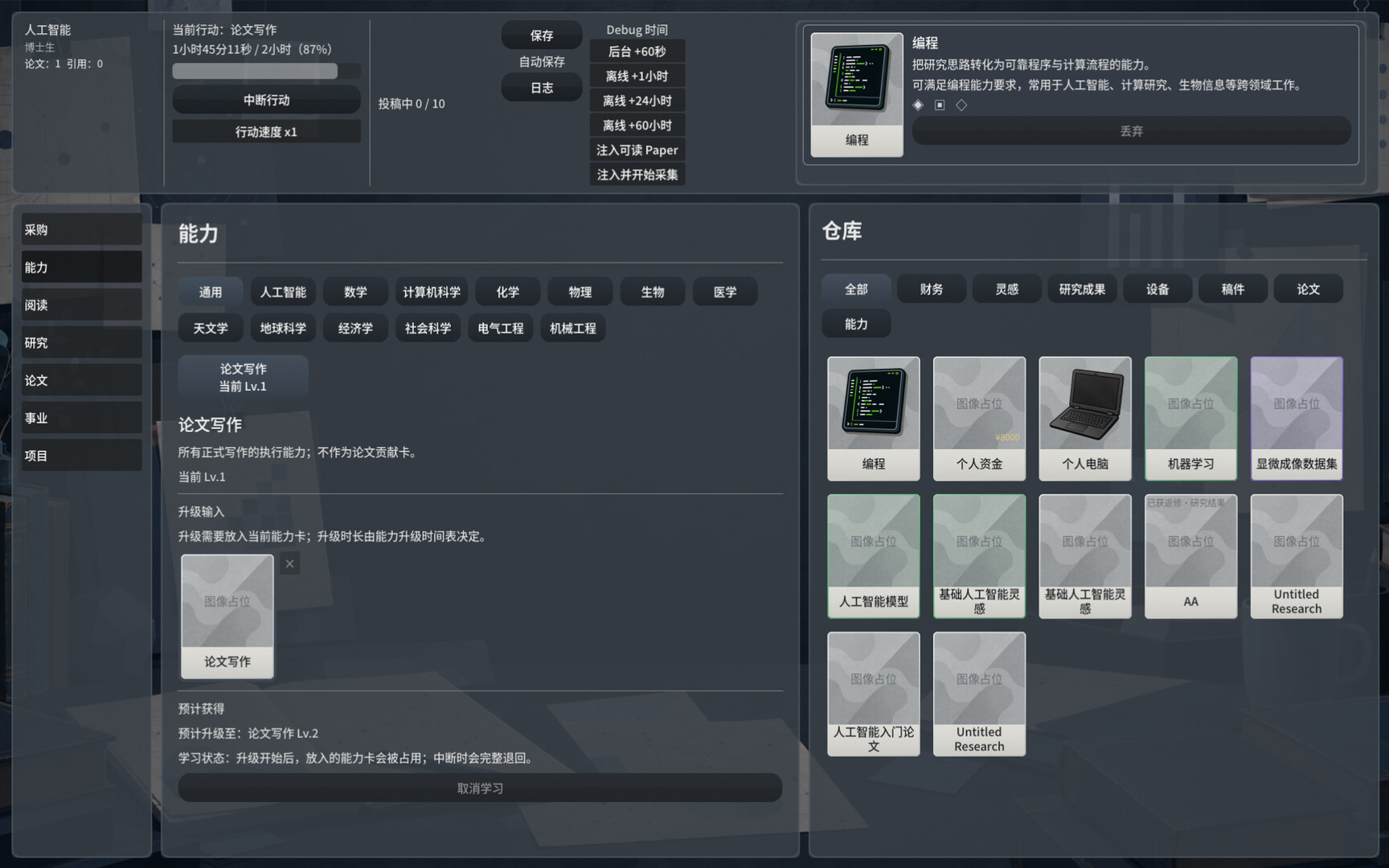
Begin your academic career, develop your abilities, work across different research fields, improve your equipment and research conditions, publish papers, take on projects, and gradually build a career shaped by the choices you make.
As your career develops, you can move into academic positions, mentor students, expand into new fields, and build a body of work that grows over time.
One paper is never the end. There is always another question to pursue, another result to develop, and another paper ahead.
Read and Discover
Read textbooks, journals, and academic papers to gain inspiration and discover new directions for your research.
Different fields, journals, and papers offer different opportunities. Decide what to read, which work to follow, and where your limited research time is best spent.
Reading is not an isolated activity. The inspiration and discoveries you gain from reading can shape the research you choose to pursue next.
Conduct Research
Turn inspiration into research.
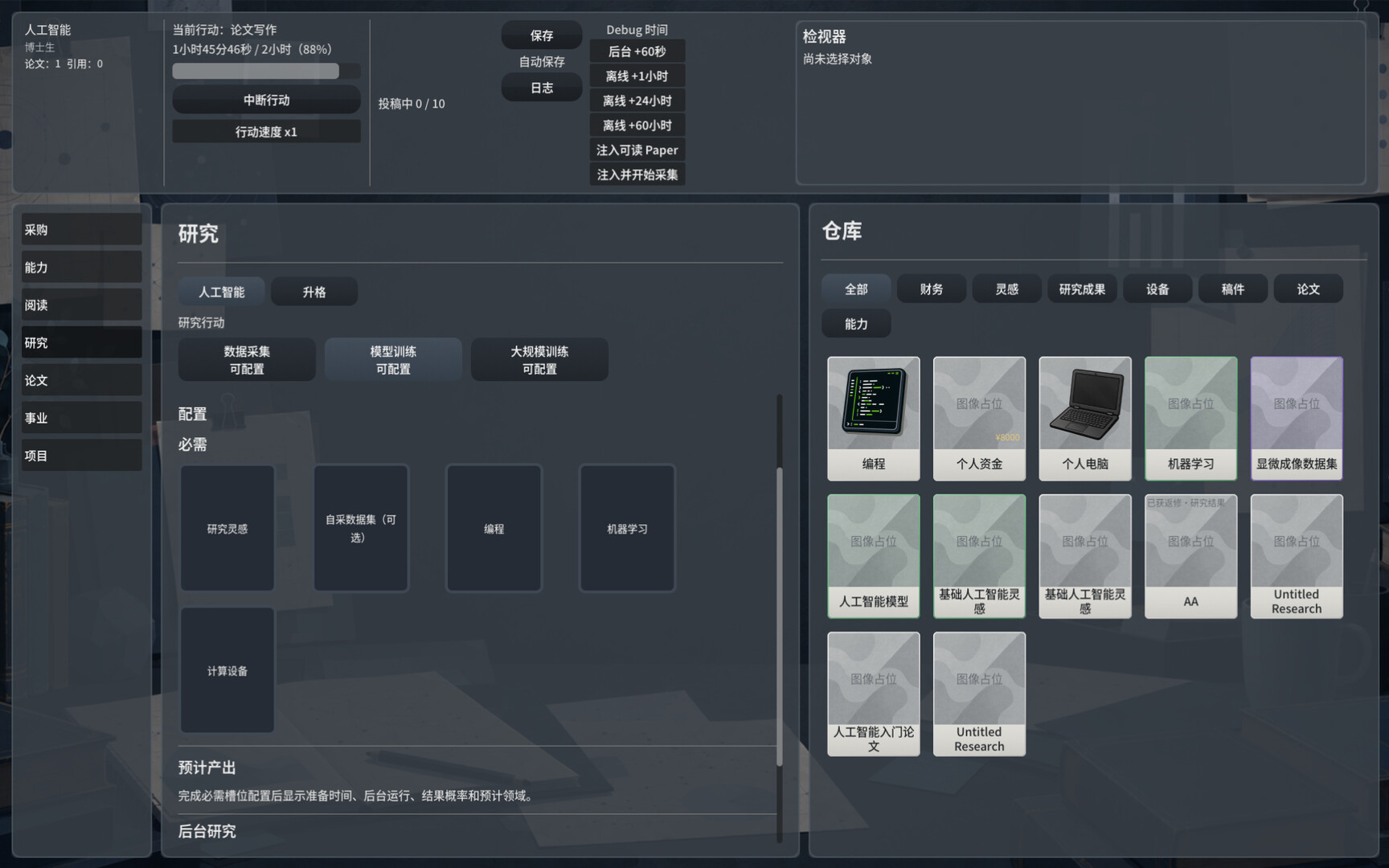
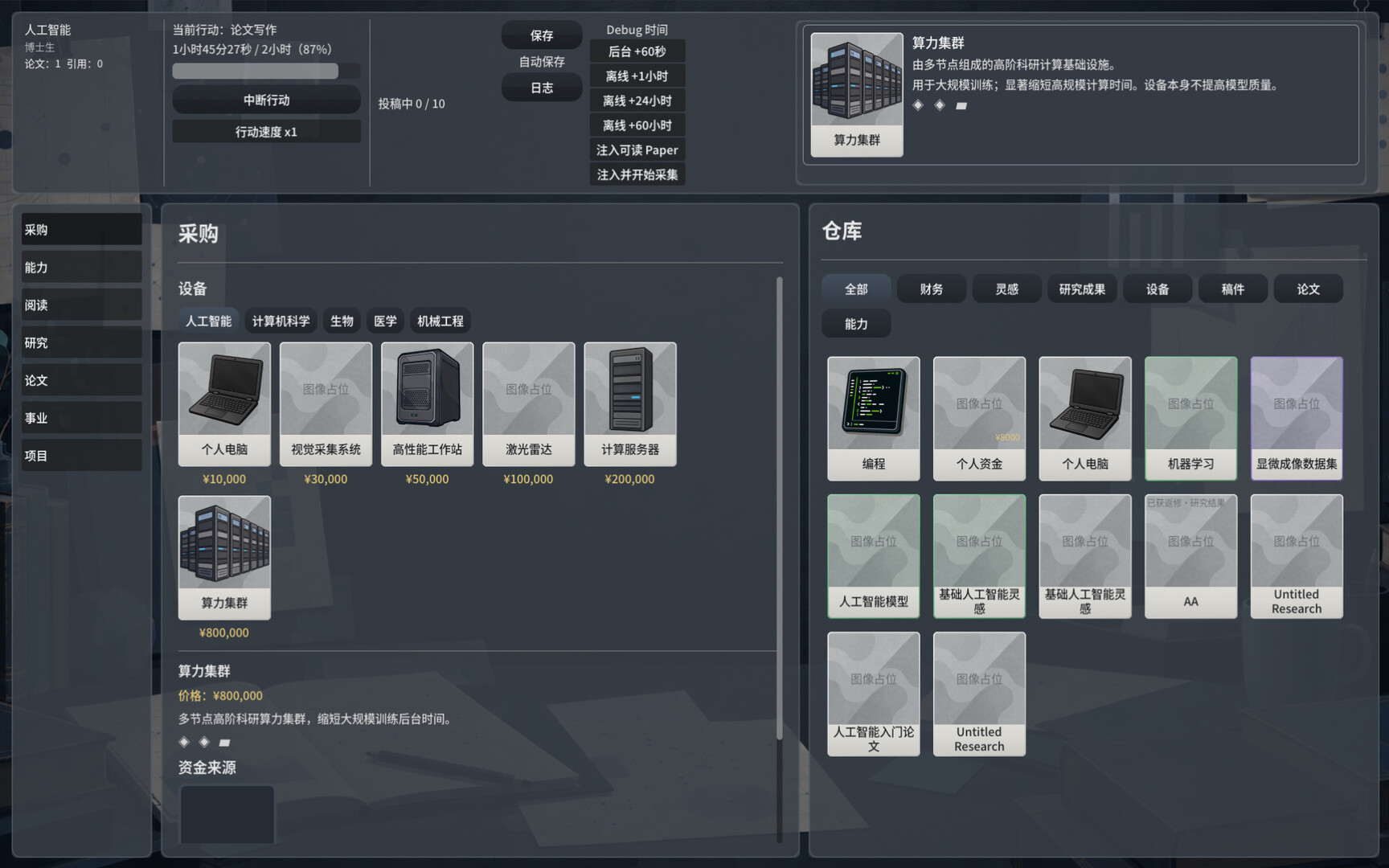
Choose a research action, prepare the abilities, equipment, consumables, and other research assets it requires, and decide how to use the resources available to you.
Different kinds of research demand different conditions. Some rely mainly on your own time, while others require specialized equipment or continue running in the background after preparation is complete.
As your research proficiency, abilities, and equipment improve, you can take on more demanding work and produce higher-quality results under the right conditions.
The game is built around decisions rather than constant clicking. You choose what to pursue and what to commit; time carries the work forward.
Turn Results into Papers
Successful research produces research results that can become the foundation of a manuscript.
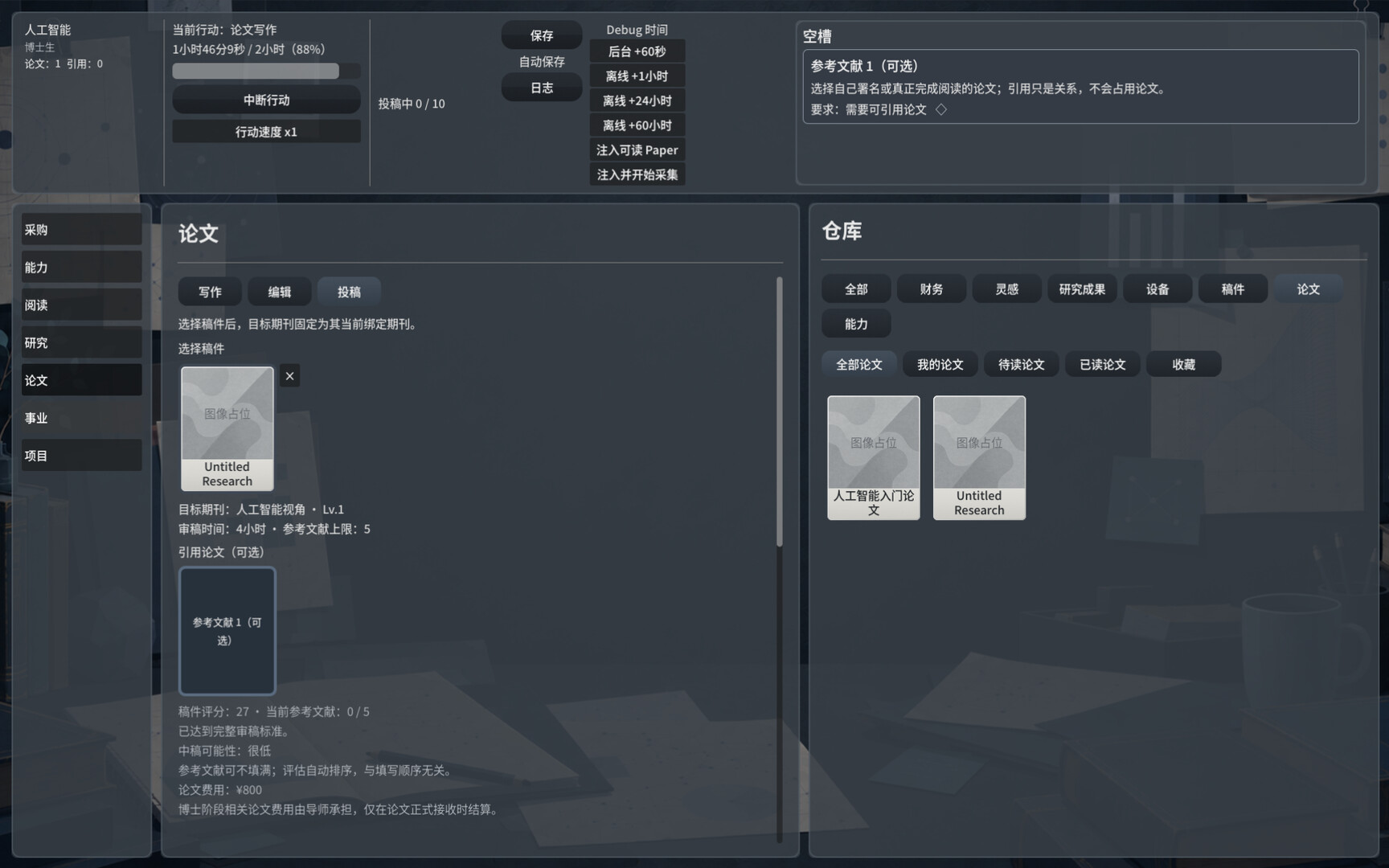
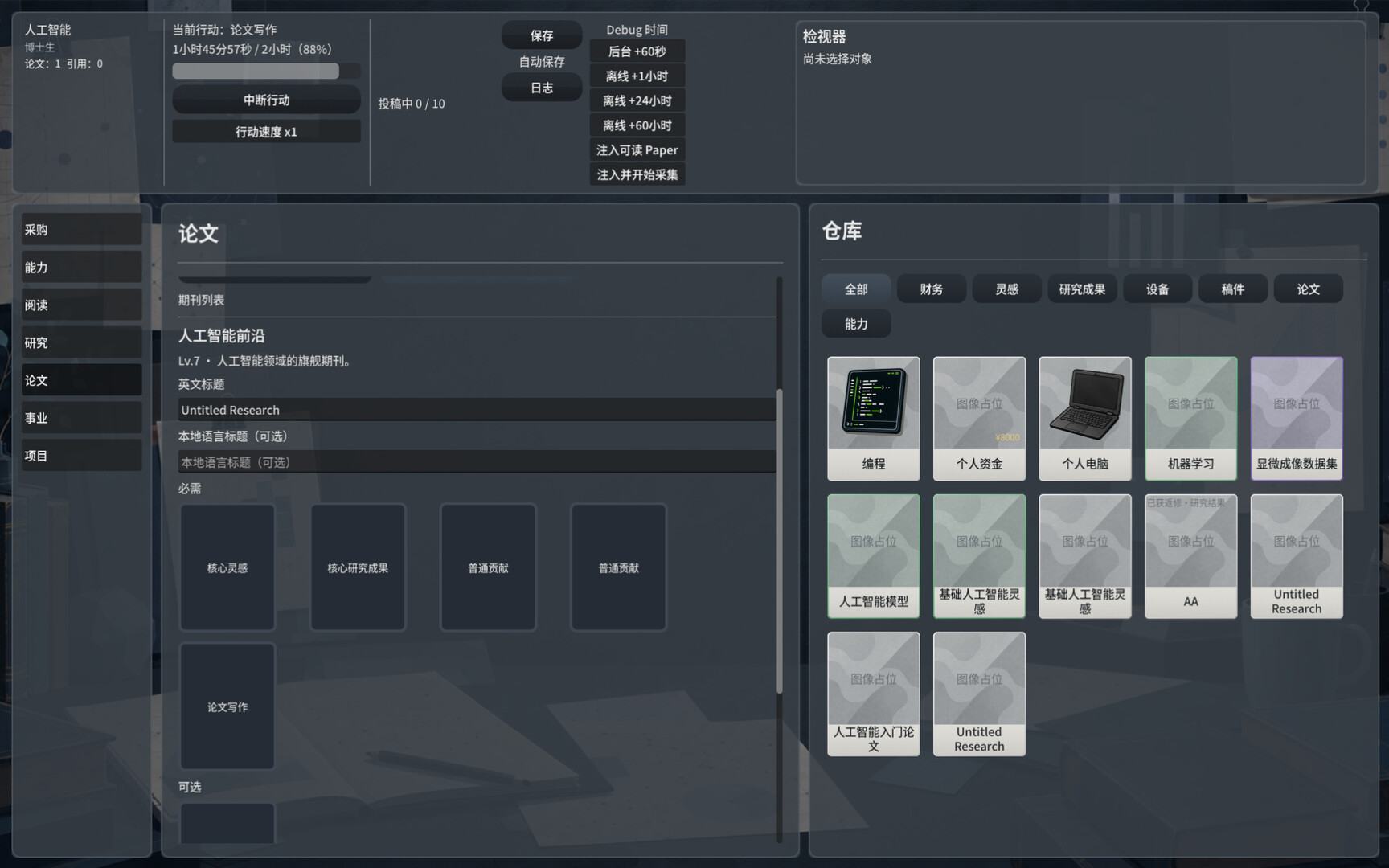
Choose which results belong in a paper, improve your writing, select references, and build manuscripts for different journals.
Once your manuscript is ready, submit it for review. It may be accepted, rejected, or returned for revision.
Published papers become lasting parts of your academic record and continue to matter as your career develops.
Manage Equipment, Money, and Projects
Research grows beyond individual papers.
Use personal funds and project funding to improve your research conditions, purchase equipment, and expand what kinds of work you can carry out.
As your publication record develops, you can apply for research projects that provide funding and longer-term goals. Published work, completed projects, and the research environment you build can open the way to more ambitious projects and further career progression.
Choosing where to spend money, equipment capacity, and research time is part of building a sustainable academic career.
Build a Team and Advance Your Career
Your academic career develops over time.
Move from doctoral training into formal academic positions, establish yourself in different research fields, and gradually take on greater responsibilities.
Later, you can mentor students of your own. Students have their own fields, abilities, talents, and development paths, and gradually become part of the research environment you build around yourself.
Leave a Record in a Shared Academic World
Published research does not disappear when a progress bar finishes.
Papers enter a shared online academic world of journals, authors, reading, citations, collaboration, and academic history.
Other players contribute to the same world. Fields grow, journals accumulate real publication histories, papers are read and cited, and the academic landscape changes over time.
Your papers, projects, students, collaborations, citations, and the fields you help develop gradually become a record of your own research career.
Progress at Your Own Pace
The Next Paper is designed around long-term planning rather than constant input.
Make your decisions, start your work, and let time pass. Return to completed research, new papers, available equipment, project decisions, and new opportunities.
You can focus deeply on one field or gradually expand into others.
You do not need to watch every progress bar.
There will always be something worth coming back to.