Logistica: Under Glass hakkında
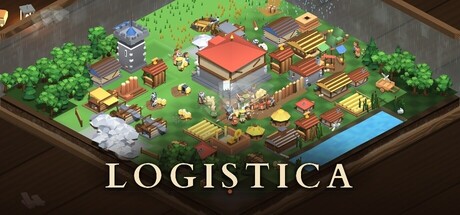
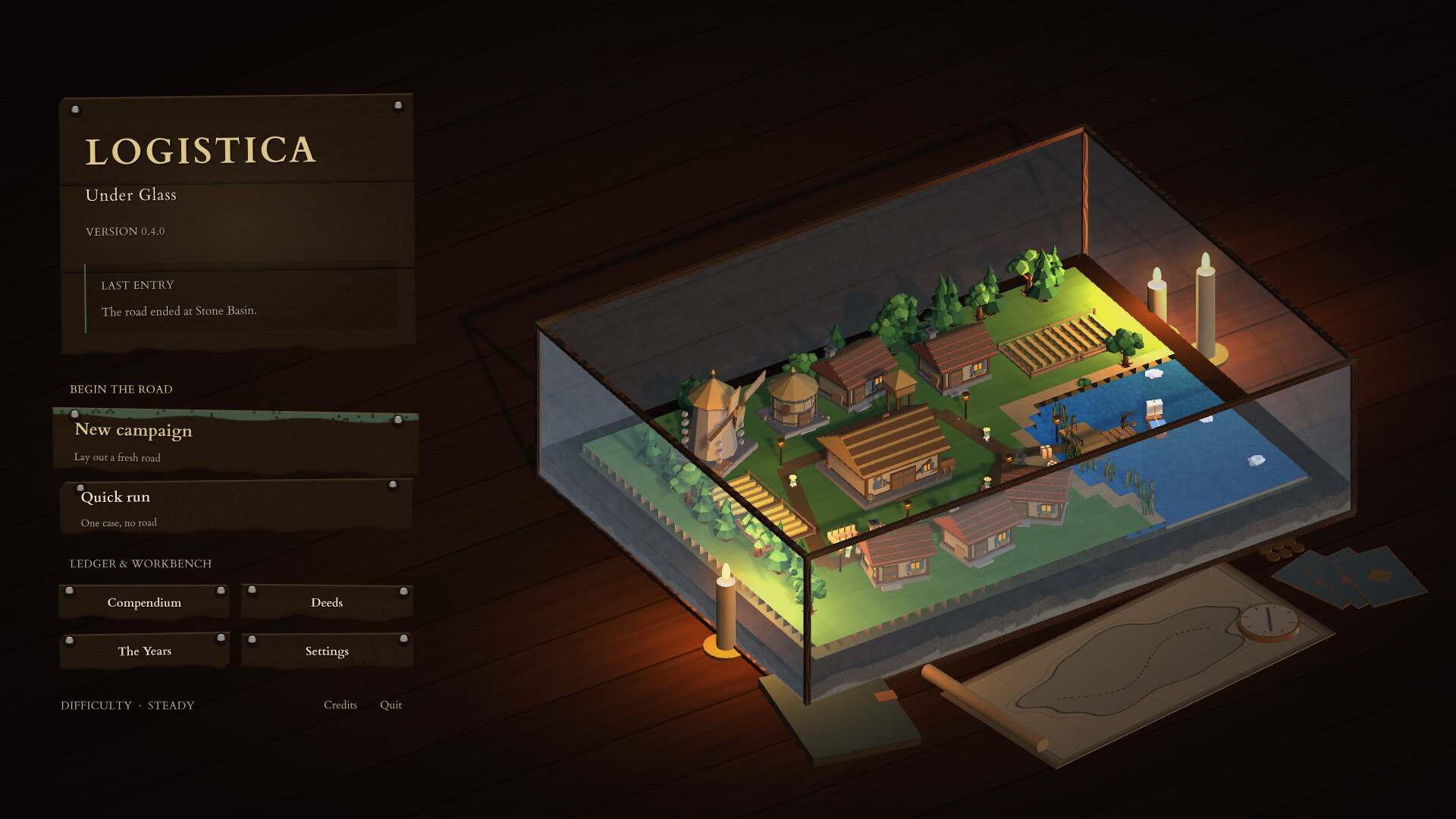
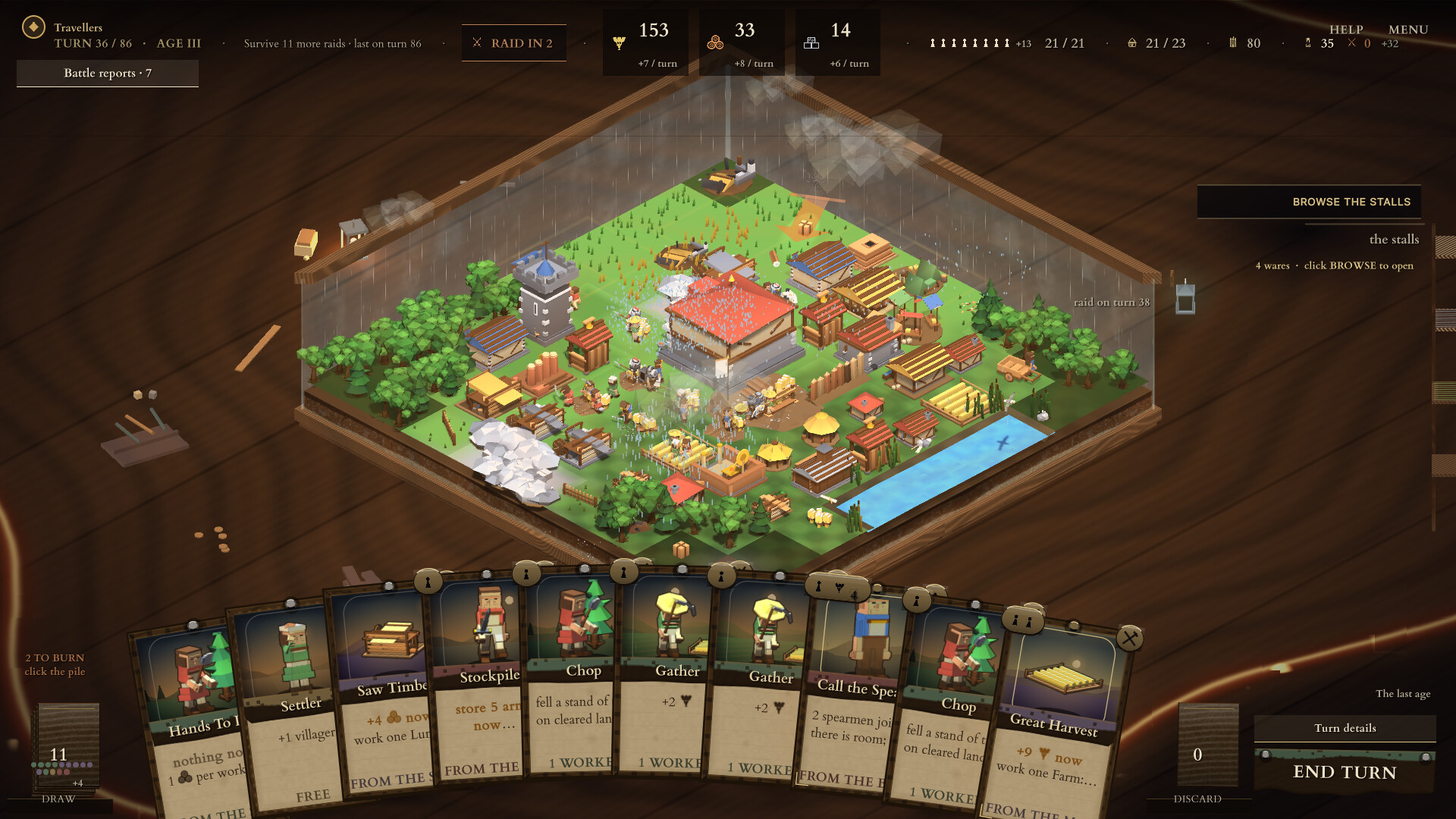
Logistica: Under Glass is a deck-builder about a medieval village growing inside a sealed glass case on a naturalist's desk. You never order a villager around. You play cards, and villagers are what the cards cost. Each one you spend walks out across the board, does the work, and comes home a turn later. The ones you hold back widen next turn's hand.
Every tile you clear counts toward the next raid, so growing the village and inviting trouble are the same thing. The lantern on the corner post of the case runs from green through ember to red as the threat climbs.
BUILDINGS ARE CARDS, AND CARDS COME OFF THE BOARD
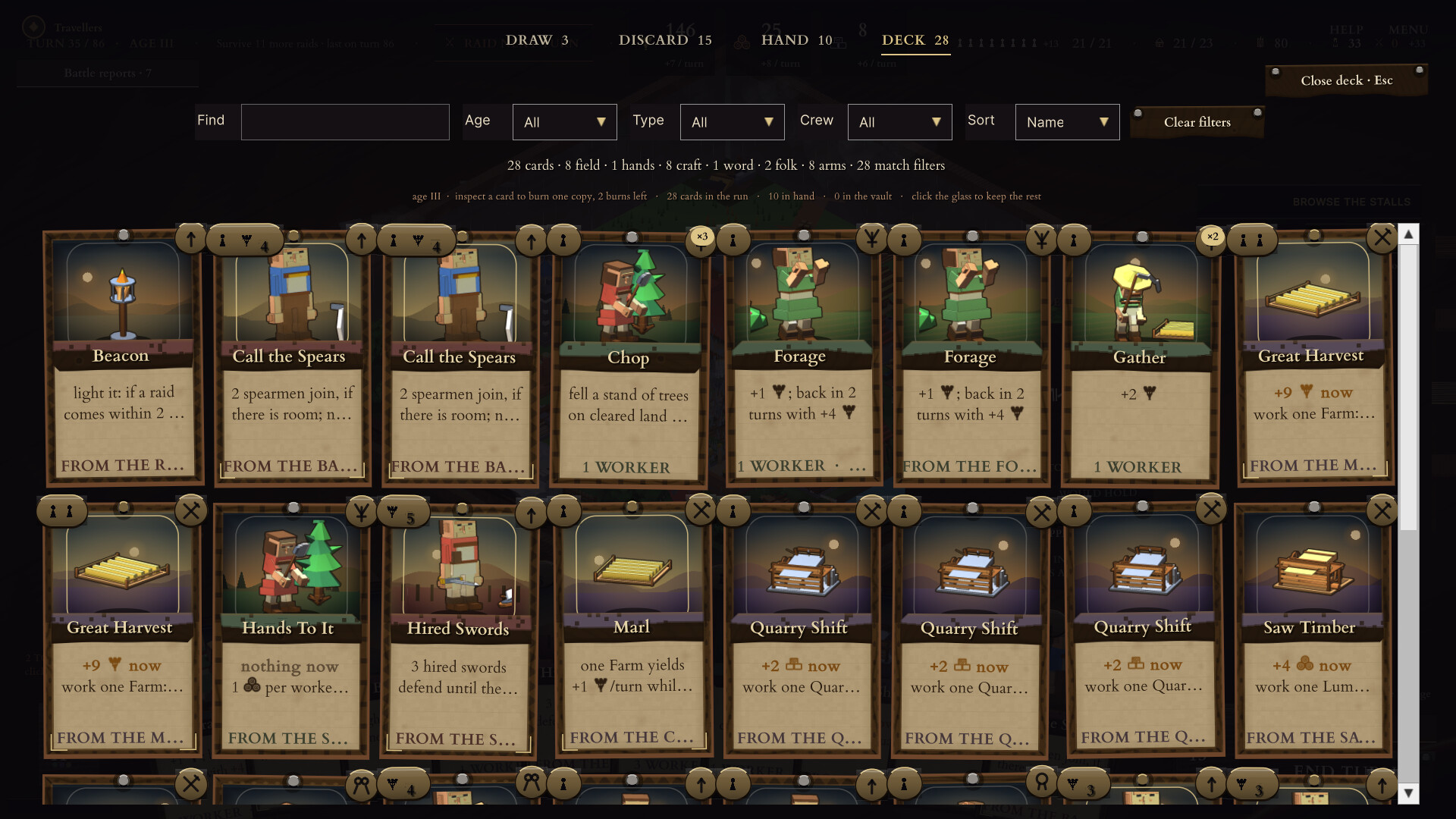
Every building in your deck is a one-shot card. Place it and it leaves the deck for good, so raising your village is also how you thin it.
What goes back into the deck comes off the board. A Farm hands you Harvest. A Lumber Camp sends Fell, a Tower sends Muster, a Smithy sends Forge Arms. If a raid burns that building down, its card leaves the deck from wherever it happens to be, whether that is your hand, the draw pile or the discard.
The same goes for what wanders in. Deer, boar and wolves roam the case, and a hunt card sits in your hand only while the animal stands on ground you have cleared. Let it walk back into the trees and the card goes with it.
The market is a rack of shelves at the side of the case, and it sells things rather than cards. Buy a building and it goes straight onto a tile. What the shelves stock depends on what already stands in your village. No Smithy, no Hired Swords.
THE BOARD IS THE OTHER HALF OF THE PUZZLE
Each tile is a 3x3 grid of cells, so footprints straddle borders and neighbours matter. Mills boost the farms beside them. Palisades stiffen each other. A Gate is worth more with wall on both sides. Docks want water, quarries want stone.
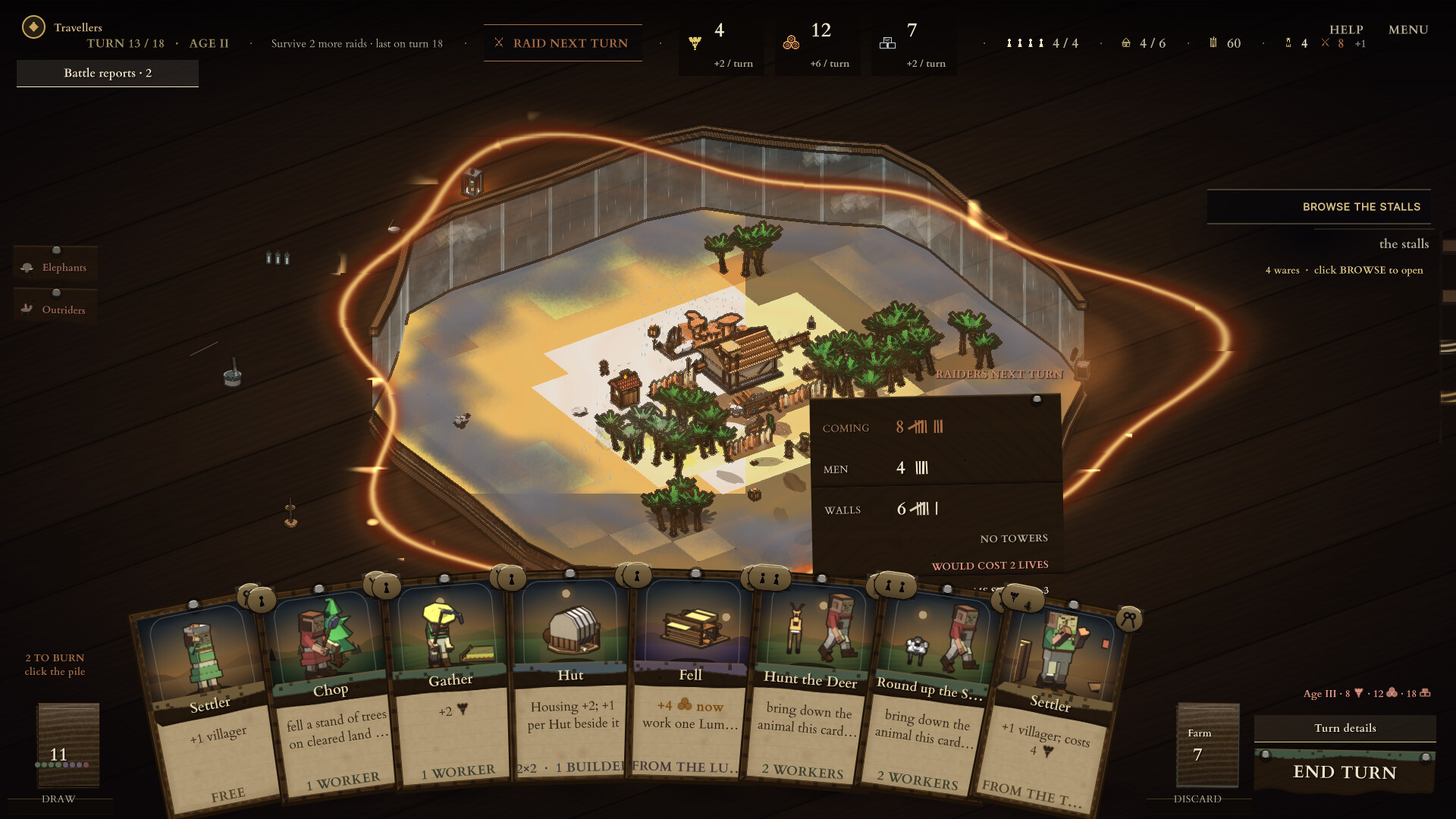
Ground outside your start square is locked and fogged until you buy it. Every tile you unlock is also a tile the raiders have counted. Tap the lantern and the tally swings out so you can do the arithmetic yourself.
Your stores are not a number in a corner. Food, wood and stone heap up in the yard beside the hall, spill onto the tiles around it when they grow, and block the ground they land on. Hover a card and its price lifts off the pile so you can see what it will cost you before you play it.
RAIDERS LOOT BEFORE THEY BURN
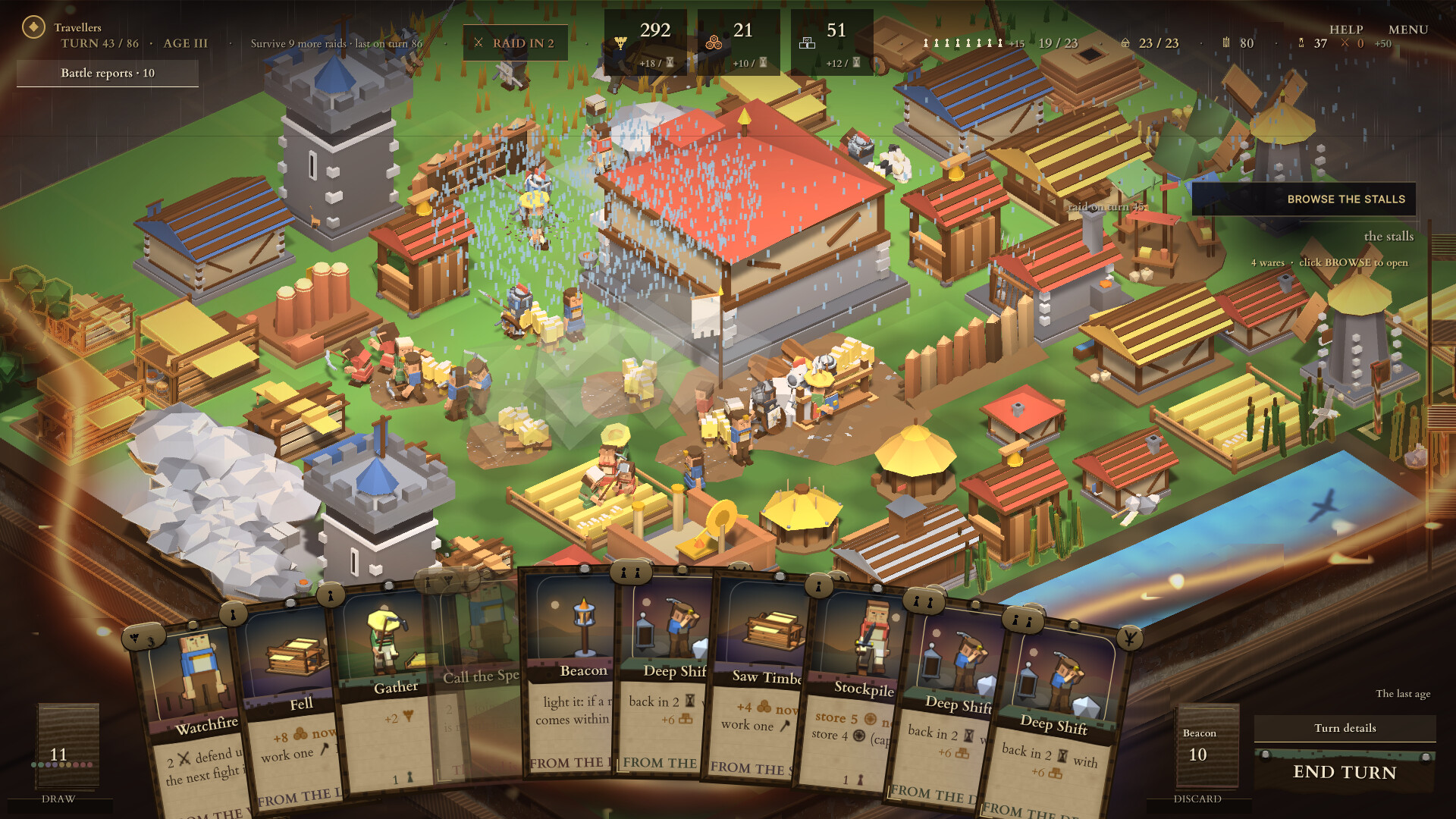
A raid measures its threat against your defence, and whatever is left over is damage. Damage steals from your largest stockpile first, so hoarding carries its own risk. Buildings only start coming down once there is nothing left to take.
Muster puts your idle villagers on the wall, where they die before your buildings do. Play another card after mustering and you have thinned your own line.
Each country sends its own kind of trouble. Desert bands bring war elephants that break walls like a ram, and panic back through their own line if you can put enough arrows in them. Jungle raiders come through the canopy and drop on whatever stands at the edge of the trees. On the coast, shoalmen wade in past your walls, sack the hall and carry the loot back into the water, and every sack you kill for comes back to the pile. Further down the road come men in harness who shrug off a single blow, the long man who walks the rut your own carts have worn, and bands that drag a ram or an engine up to the glass.
The Town Centre is the run. Raiders who get past everything else put their blows into the hall, and a hall that falls ends the place there and then.
AGES
Pay the Town Centre for the next age and your Builders leave for two turns. When they return your hand grows, the stalls open a new shelf, and the deck owes you a burn. Pick any card from any pile and it is out of the run for good.
The case wears its age. A new village is a pencil sketch under parchment, the second age inks it, and the third paints it in, with the change sweeping out across the board from the hall.
FOUR PEOPLES
Set out as the Travellers, the Norse, the Romans or the Egyptians. Each people builds its own houses and halls, fields its own villagers, plays by its own standing rule and carries five cards no other deck holds. The Norse are paid for carrying debt. The Romans write the record and strike from it. The Egyptians read their monuments. The Travellers move goods sideways and take the long way round.
THE ROAD
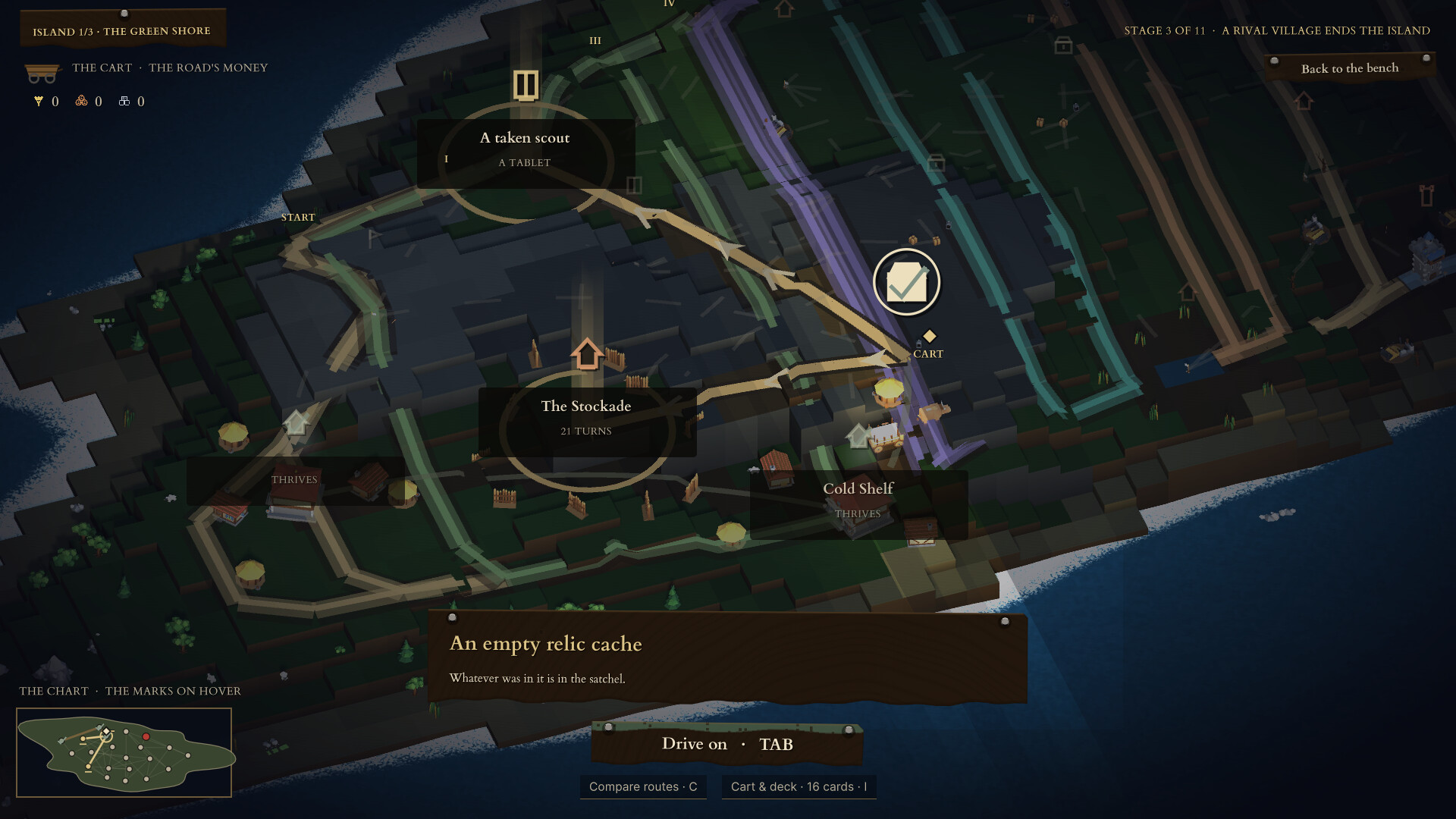
A case is one run. Win it and you go out onto a road across an island you drive yourself. You are the ox cart, and the country around each stop is that stop's biome.
Each place is a run with its own bed, outline and rule. Raiders wading in off the coast. A quarry already standing. Walls already up. Every edge at once, at the last case, where a rival town brings its own army against yours.
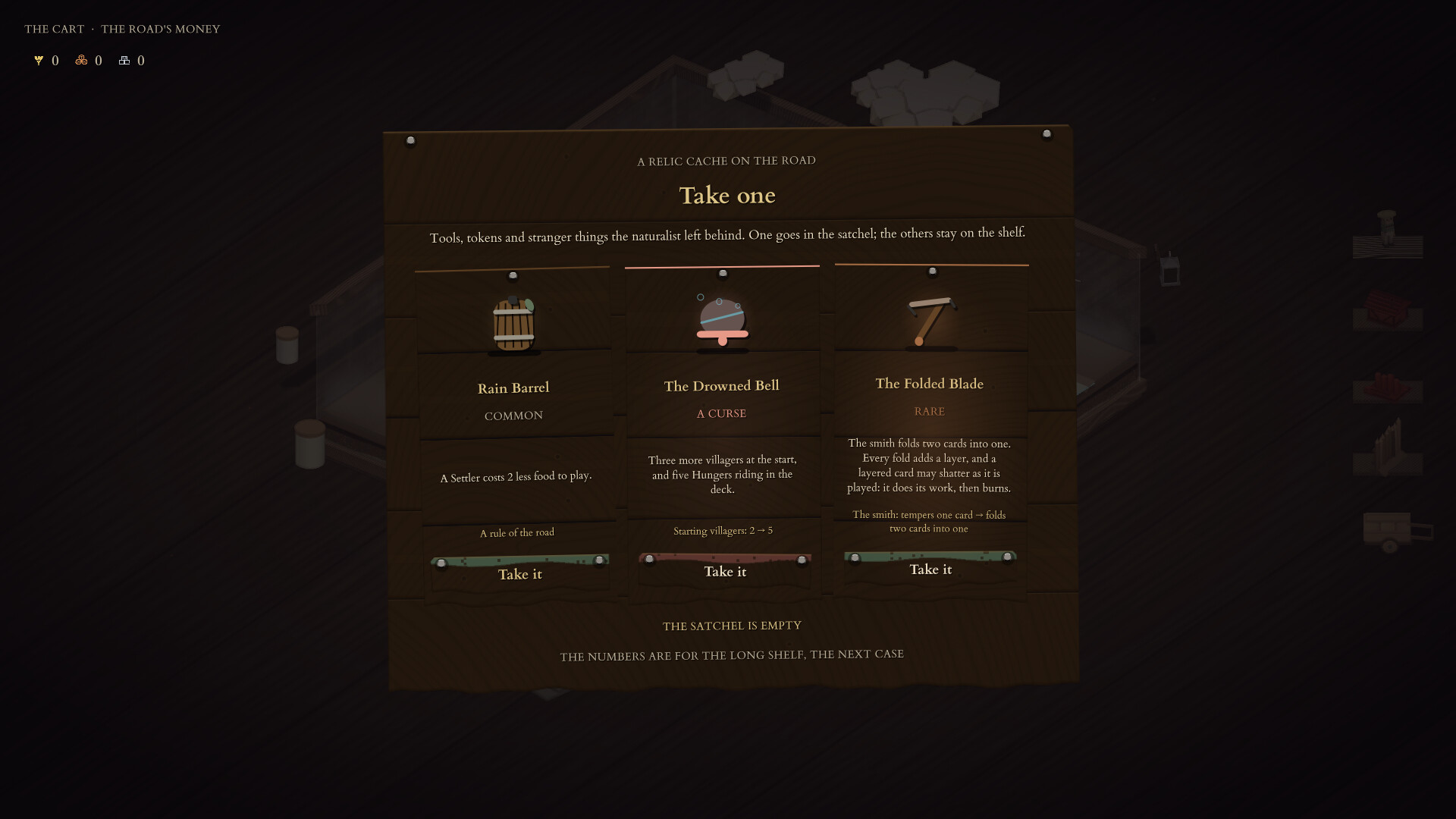
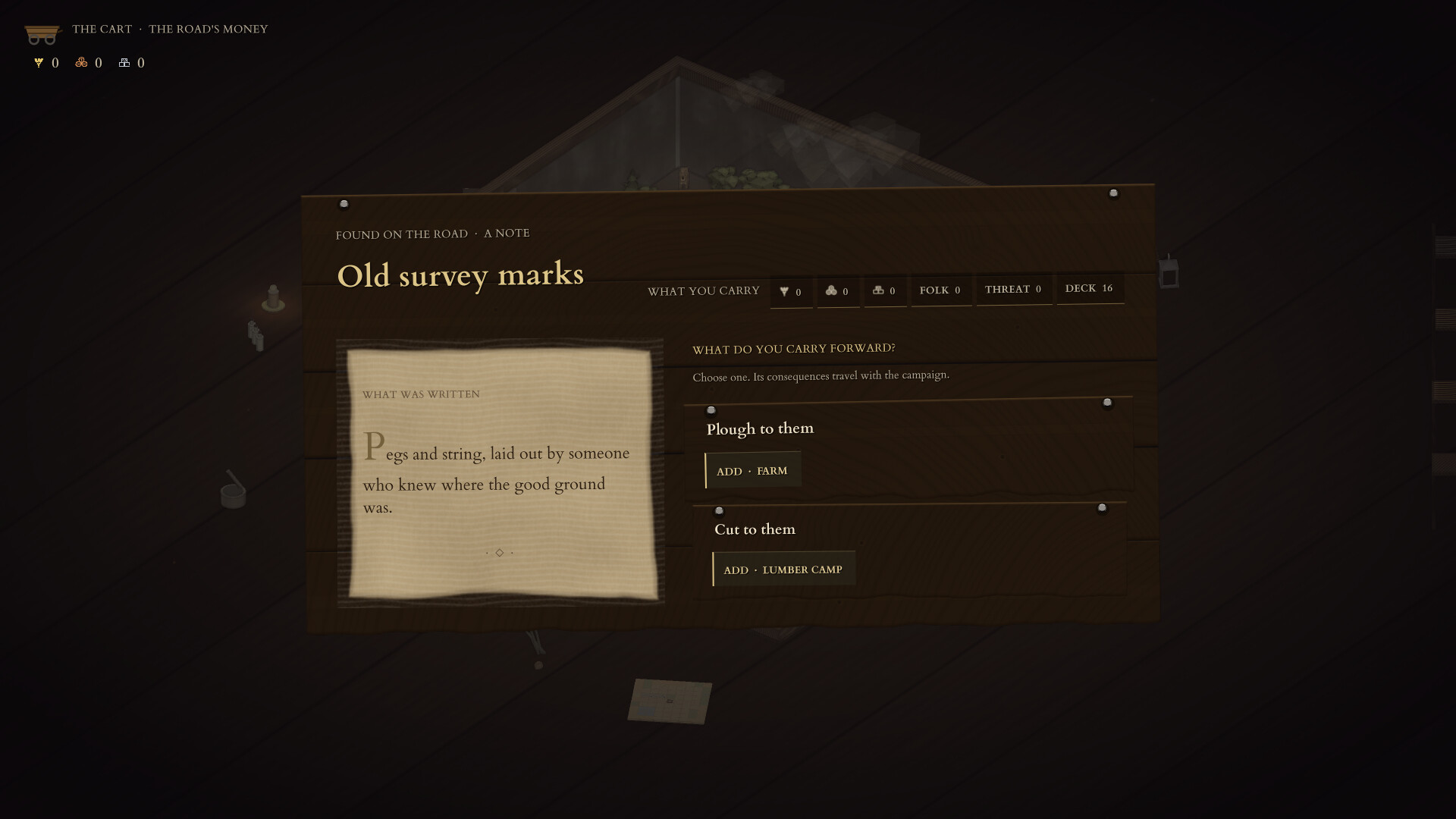
Between places you find notes, each offering a choice of two. Cards for the deck, a purse, a card burned out, an upgrade. Jars hold relics that change the rules of the runs that follow. Cheaper tiles, wider markets, a warning turn before every raid. The jars sit on the desk beside the case and pulse when their rule fires.
Lose a place and the road ends there. Start again and the island is laid out fresh.
WHAT YOU KEEP
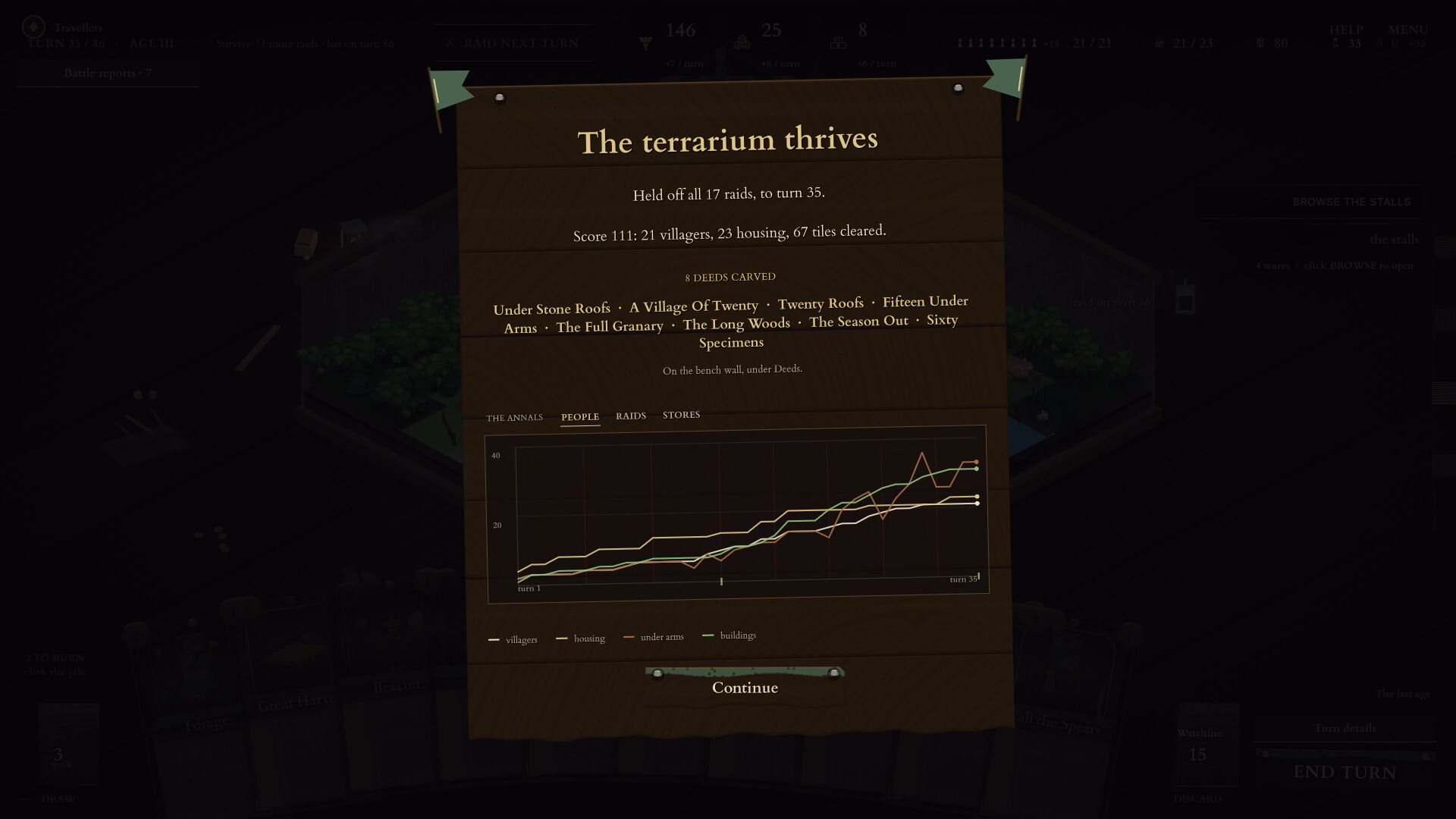
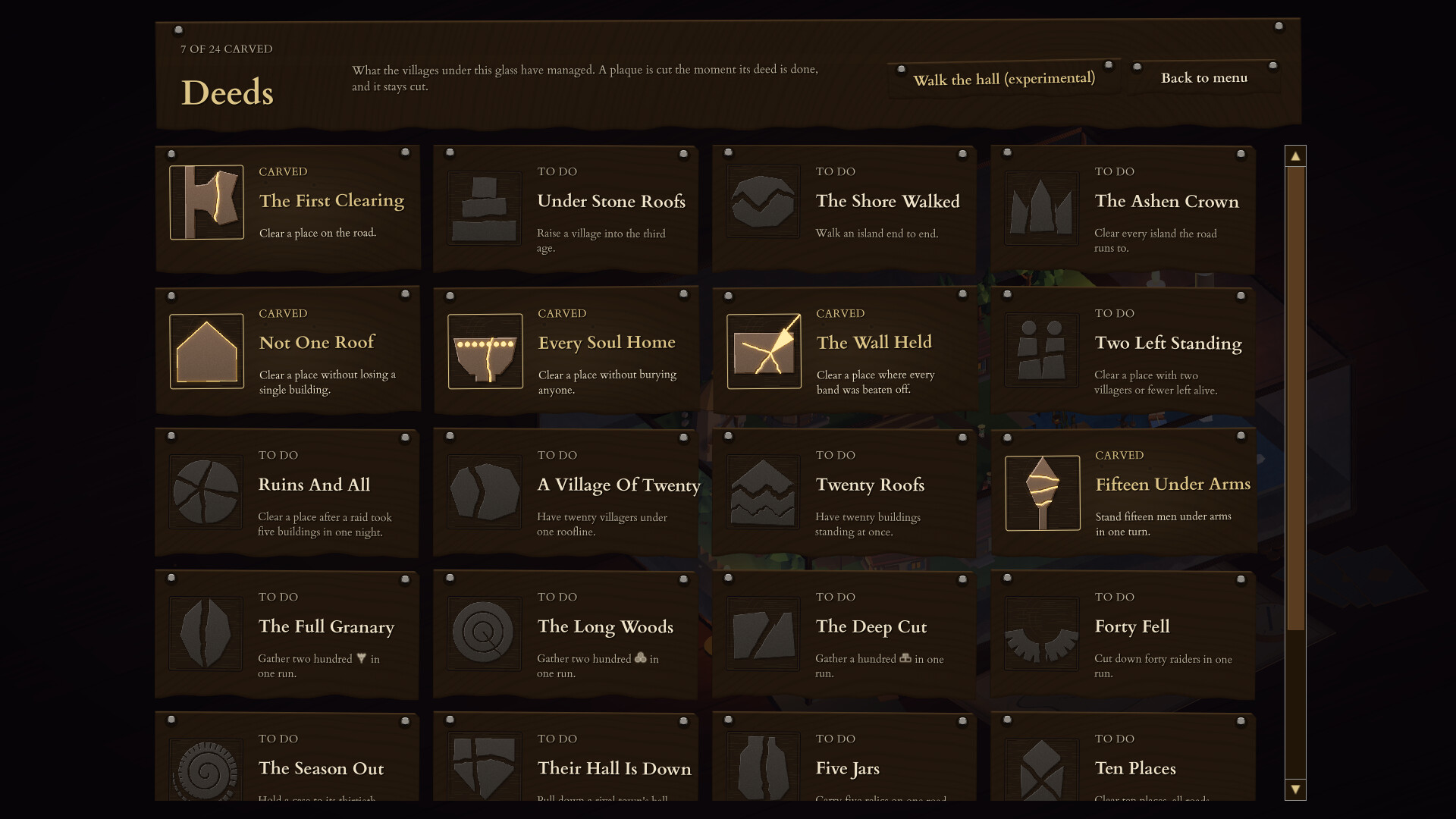
Every run keeps annals, and the end board plots them: people, housing, arms and buildings turn by turn, every raid marked where it landed. Deeds are carved on the bench wall as you earn them, and can be walked as a torchlit hall inside the Town Centre.
FEATURES
Villagers as energy. Cards cost people, not mana. Spent villagers walk out, work, and return a turn later.
Buildings are one-shot cards. Placing a building is deck thinning.
A deck that answers to the board. Buildings put their own cards on your draw pile. Burn the building and the card goes with it. Animals put a hunt card in your hand only while they stand in the open.
Growth is threat. Every tile you clear feeds the next raid. The lantern shows how exposed you are.
Raids loot before they burn. Your biggest stockpile goes first, then walls, then buildings, then people. Break the hall and the run is over.
Raiders that belong to their country. Elephants in the desert, treewalkers in the jungle, shoalmen on the coast, harnessed men and siege engines further down the road.
Four peoples. Their own buildings, villagers, standing rule and five cards each.
Ages. Each one grows your hand, opens a new shelf and costs you a card from the deck, and the case goes from sketch to ink to paint as you climb.
A drivable road. An island laid out fresh each campaign. Six board outlines, four biomes, a rival town at the end.
Relics in jars. Most rewrite every run that follows.
Rarity that means supply. Rare cards have a fixed number of copies for the whole run.
Stores you can see. Heaps in the yard that spill onto the board and cost you ground.
Annals and deeds. A chart of every run, plaques for what you managed, a hall to walk them in.
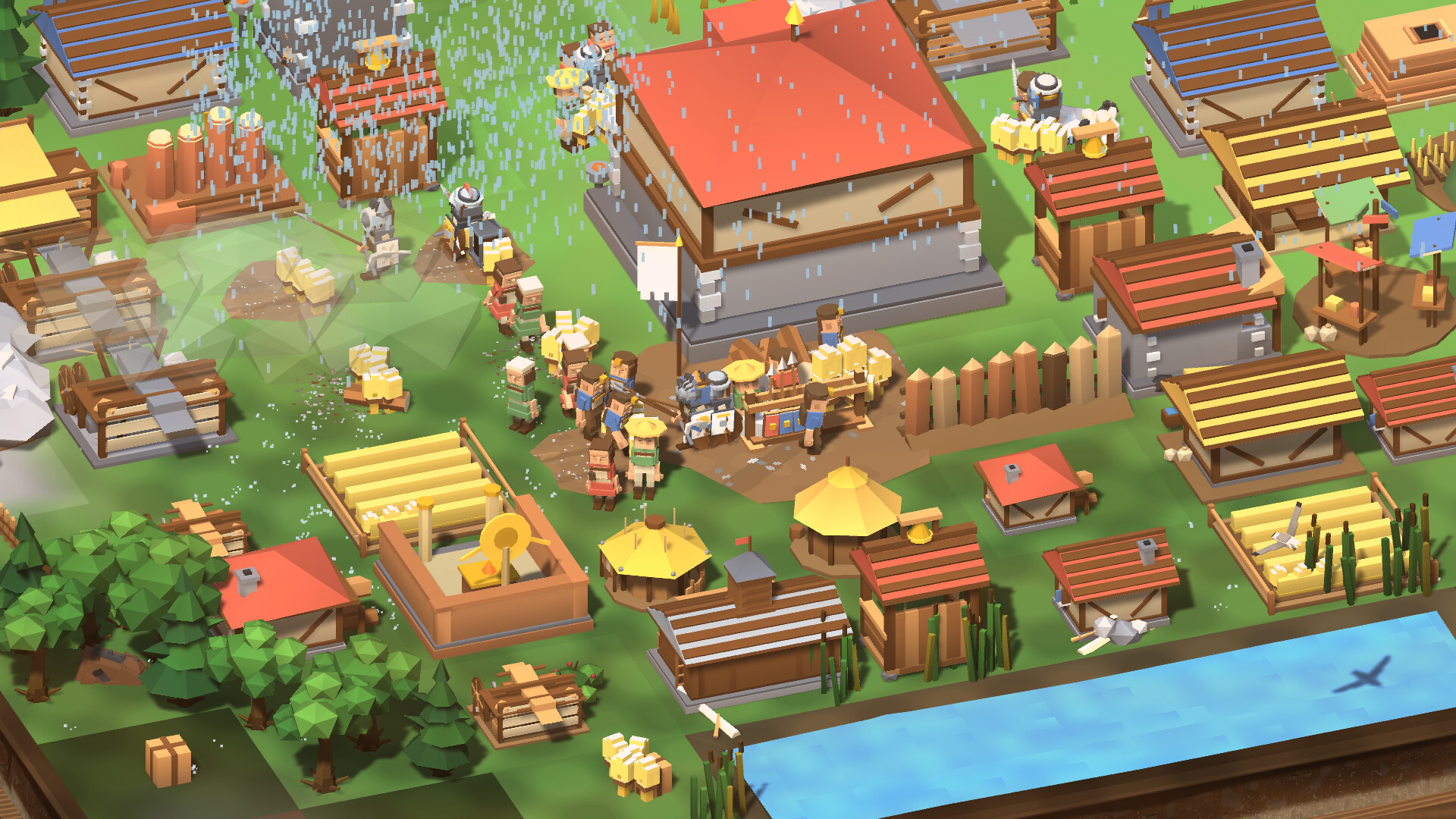
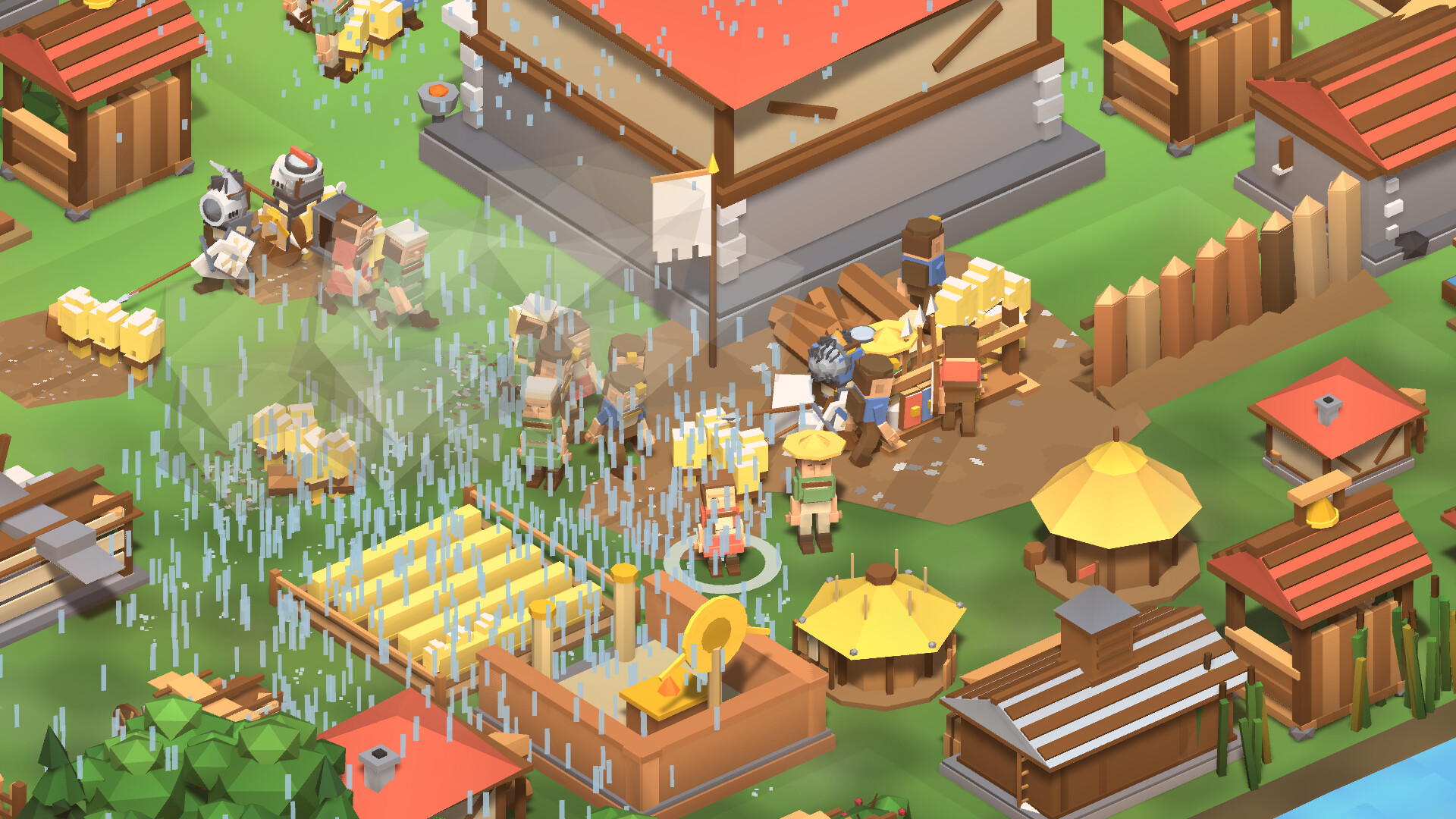
Built to be looked at. Flat-shaded low poly under glass on a dressed desk, weather on the pane, a few art looks to pick from, a camera you can orbit and push in on, a photo mode, and a ride-along that puts you at a fighter's shoulder when the raid lands.
Sound made in the machine. Every cue, from surf to spear on shield, is synthesised in code.
CONTROLS
Drag the glass to turn the case, scroll to zoom, tap a card to lift it and tap again to play it. Everything is one pointer, so nothing is buried behind a modifier key. P drops the interface for a photo, V climbs down to a fighter's shoulder during a raid, and Tab opens the whole rule of whatever card you are holding.