中国式青训 hakkında
Start on August 1, 2005 with an understaffed youth academy. Build U13, U16, and U19 squads, develop players, recruit coaches, compete locally and nationally, and survive training fees, talent stipends, guardian demands, transfer disputes, and regulations that always arrive too late.
## About This Game
You are not taking over a powerhouse.
You are taking over a training ground that needs repairs, a ledger nobody properly explained, three incomplete squads, and a parent group chat that can explode before breakfast.
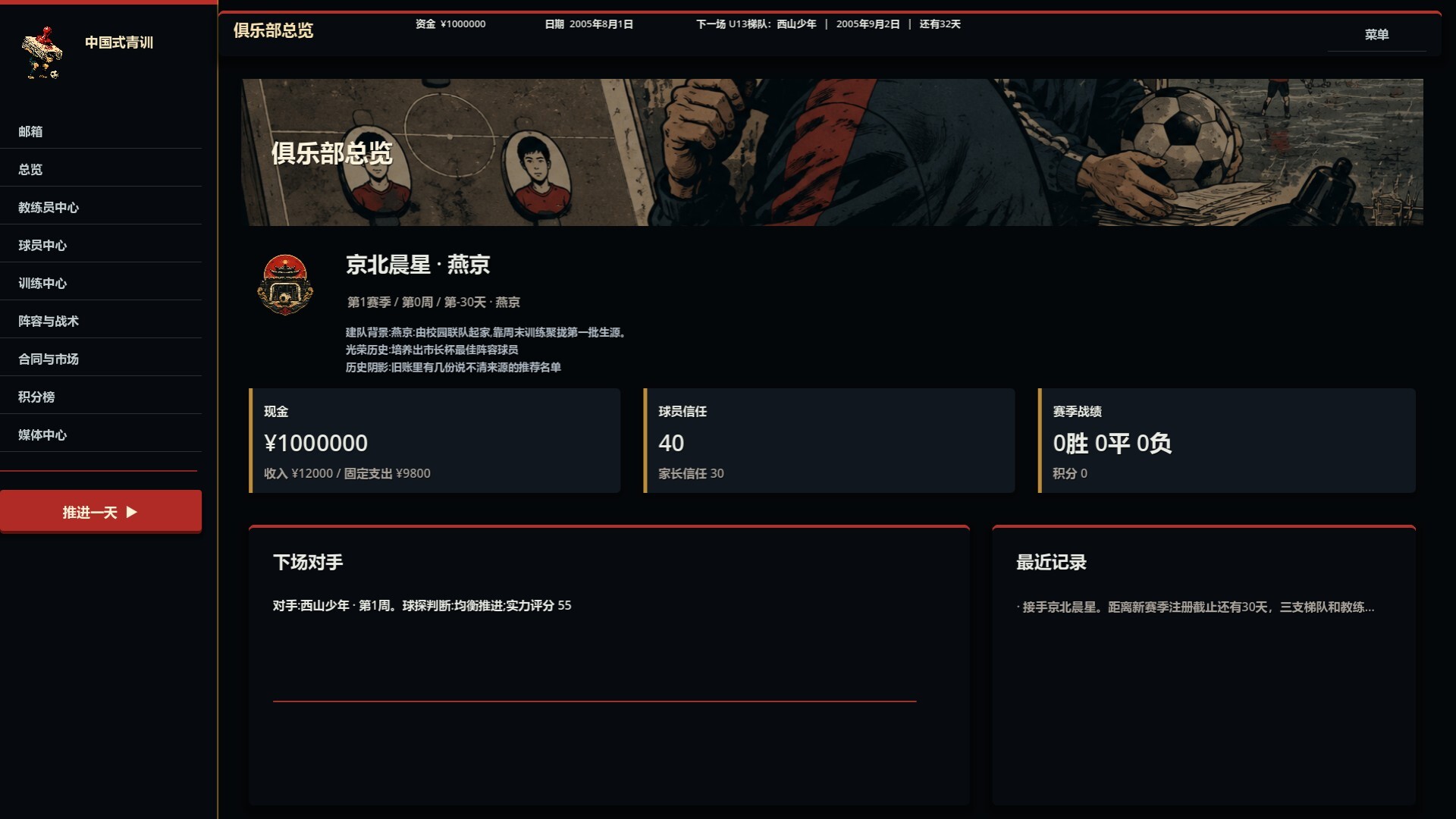
**CHINA YOUTH ACADEMY** is a darkly comic management simulation about grassroots youth football. The game begins on August 1, 2005. You have 30 preseason days to recruit players, assemble a coaching staff, complete three age-group squads, and prepare for a very long season.
### Manage Three Independent Squads
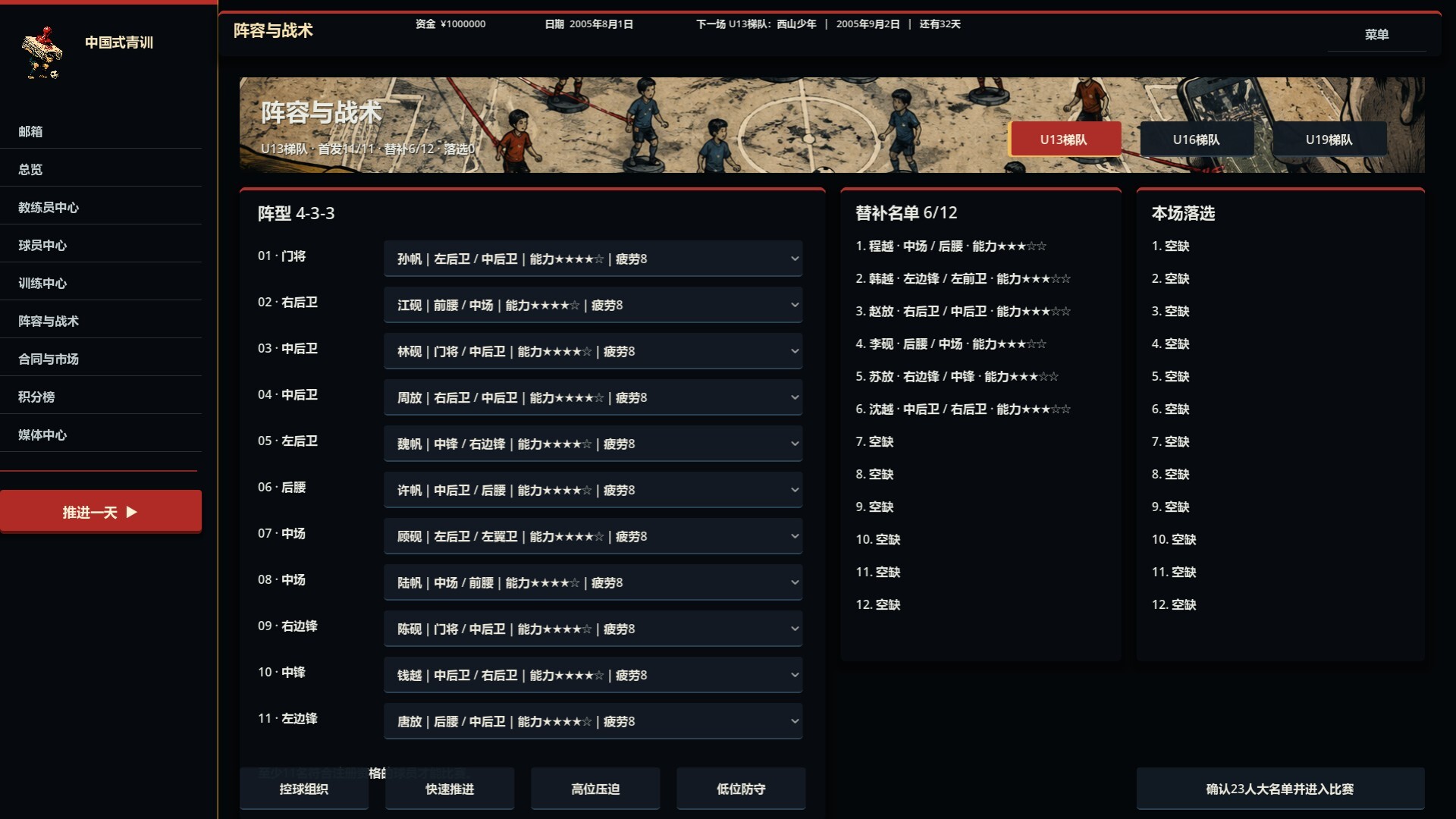
- Run U13, U16, and U19 teams at the same time;
- Register up to 35 players in each squad;
- Set training, formations, tactics, matchday squads, promotions, and age eligibility;
- Develop players from age 12 until academy eligibility ends on their 18th birthday;
- Keep training, fatigue, fixtures, standings, and national competitions separate for every squad.
### Training Actually Changes Players
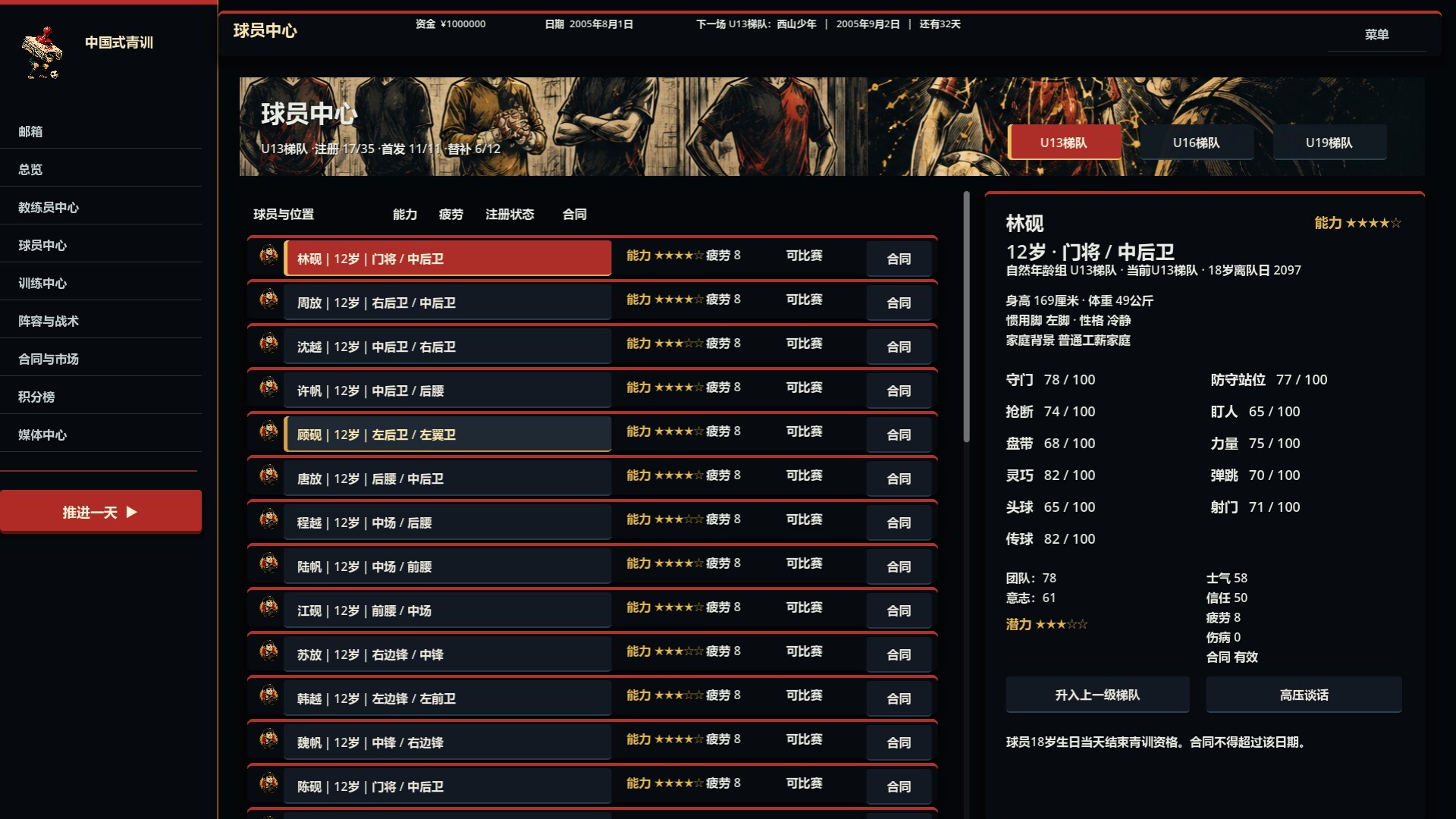
Ability is derived from goalkeeping, defensive positioning, tackling, marking, dribbling, strength, agility, jumping, heading, finishing, passing, and other underlying traits.
Training improves specific attributes, but it also creates fatigue, injuries, and form swings. Height, weight, preferred foot, personality, family background, teamwork, willpower, and potential remain stable in the save and shape each player’s development.
### Not Every Player Gets a Wage
Ordinary families may pay academy training fees. High-potential players can demand discounts, scholarships, development stipends, or a youth employment contract after turning 16.
As players grow older, perform better, and attract outside interest, guardians become harder negotiators. Every signing and renewal is a negotiation, not a confirmation button.
### A Living Fictional Football World
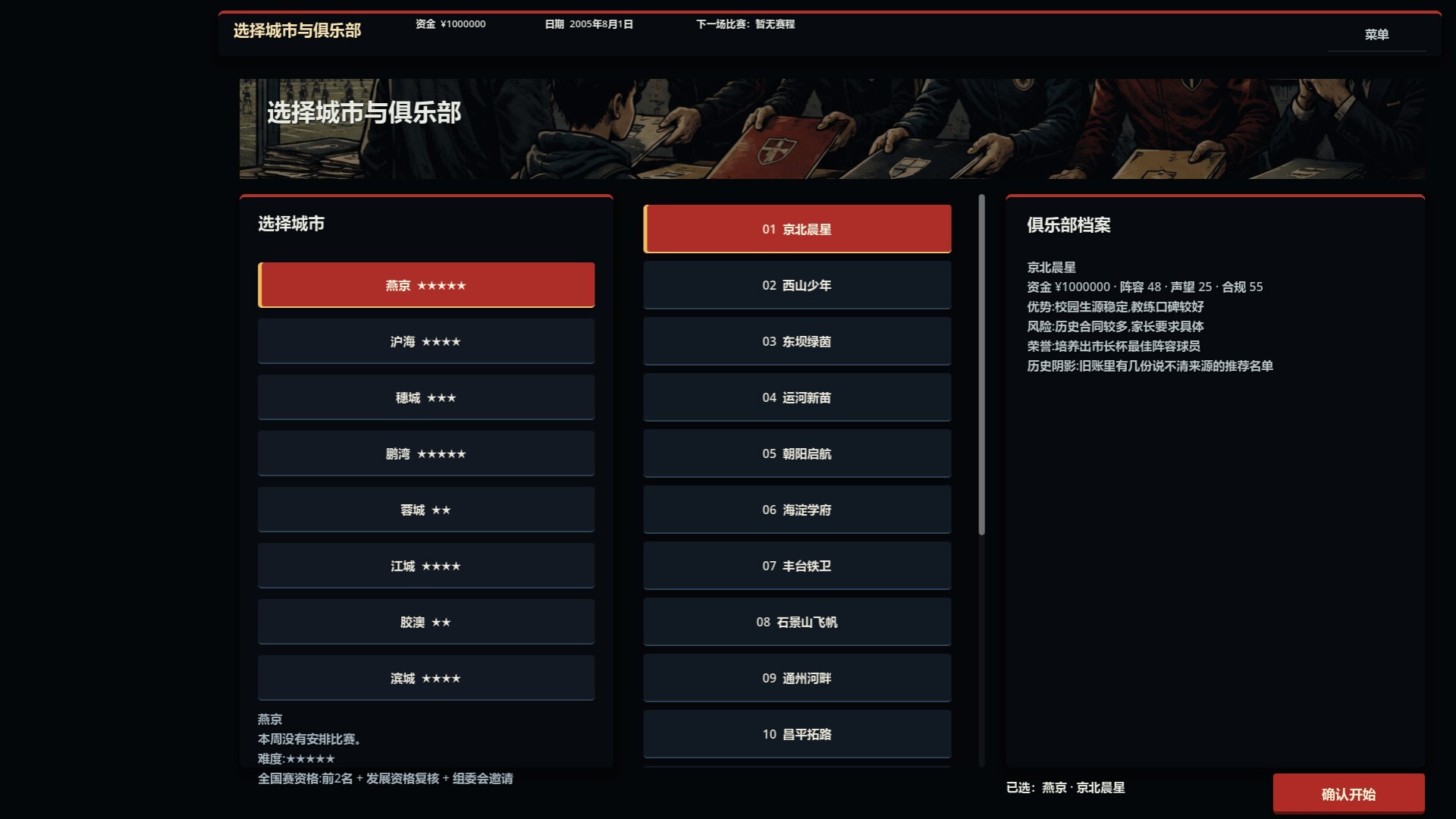
- Eight fictional cities with recognizable regional character;
- 128 entirely fictional youth academies;
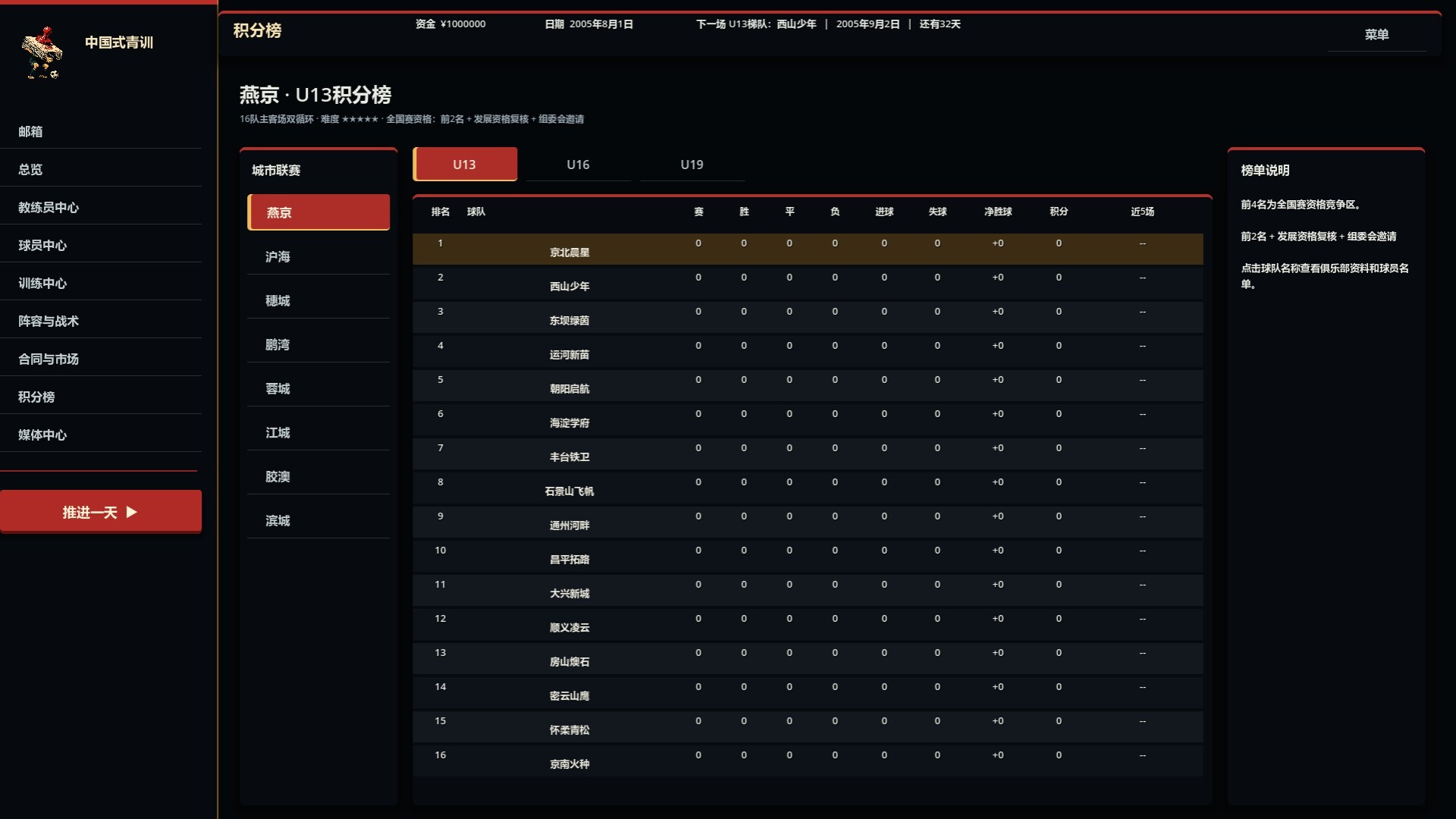
- Three city-league levels and three national competitions;
- Rival clubs that train, recruit, renew, promote, buy, sell, and compete for talent;
- Professional clubs that may scout outstanding players aged 16 and above.
### The Paperwork Is Harder Than the Match
An accepted offer does not complete a transfer. Payment, registration certificates, administrative review, supplementary documents, arbitration, and long disputes can all decide whether a player is allowed to play.
National competitions bring last-minute rule changes, paid reviews, sudden venue changes, and suspiciously flexible development evaluations. Every grey event is fictional and satirical, focusing on cost, risk, and consequence.
### Everything Arrives in Your Inbox
Match notices, squad registration, training reports, injuries, guardian complaints, expiring agreements, transfer offers, payment problems, registration disputes, administrative reviews, national competition notices, and season summaries all arrive in one inbox.
You can read them later. They will not wait.
### You Are Not Managing Football
Balance results, cash, player development, guardian satisfaction, coaching demands, and institutional risk.
Doing the right thing can be expensive. Taking a shortcut always leaves a record.
You are not managing football.
You are managing the explanation that keeps the academy alive.