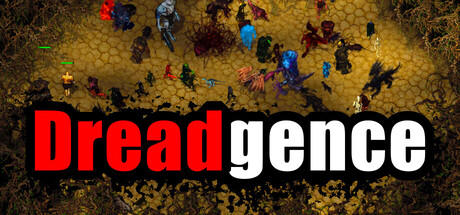
A deterministic horror autobattler. Bind extinct monsters as Pacts, arm them with Rites and Relics, then deploy. Your units fight automatically with no mid-battle commands you win by building the right answer before combat begins. Conquer wounds, deepen your Pacts, and automate what you've mastered.
A recolher amostras diáriasAinda não há amostras diárias guardadas para este jogo. A curva aparece assim que estiverem disponíveis os primeiros dias de histórico.
24 horas—7 dias—TendênciaEstável
Análises0 análises
—No user reviews
0 positivas0 negativas
Recomendações—Pontuação0/9
Últimos 30 diassem dadosProporção negativa—Pos. por neg.—
Multimédia
9 imagens
Detalhes do jogo
Acerca do jogo
Jogo
Data de lançamento16 de novembro de 2026Chega daqui a 2 meses
MínimosRecomendadosSistemaWindows 10 64-bit—CPUIntel Core i3-6100 / AMD FX-8350—GPUDirectX 11 compatible GPU with 1 GB VRAM—RAM4 GB RAM—Tamanho da transferência1 GB available space—
Acerca do jogo
Acerca de Dreadgence
Dreadgence
You do not fight. You prepare.
Dreadgence is a deterministic horror autobattler about building a roster that can survive battles you cannot control.
Choose your Pacts. Equip their Rites and Relics. Decide what each monster brings to the composition. Then press Deploy.
Once the battle begins, your units fight entirely on their own. There is no clicking abilities, steering characters, changing targets, or making last-second saves. Your Pacts and the creatures of the wound follow their predefined behaviors until one side wins.
Your decisions happen before the fight.
BUILD → DEPLOY → WATCH → ADAPT
A run is a pure function of your preparation. The same setup facing the same Reading produces the same result. If your monsters die, the answer isn't faster reflexes. Study what happened, change the composition, and deploy again.
Winning is being right in advance.
The Atlas is not a map. It is an autopsy.
Every level is a wound in the body of a dead god, and none of them have closed.
You are the Blank Leaf: a single page cut out of the Atlas and given a body. The wounds remember every creature that ever died inside them.
They do not remember you.
That absence is the only weapon you have.
Steal the dead. Make an argument.
Pacts: Every monster is an extinct life agreeing to be remembered in your margin. Take its Last Name at the instant of its defeat. Deepening a Pact recovers more of its true history until the complete name rewrites how it behaves.
Rites: Repeatable sentences torn out of a wound. Attach two to a Pact to fundamentally alter its role in your composition.
Relics: Physical evidence that contradicts the Atlas's official account. Rank them up to awaken the clauses sleeping inside.
Readings: Deterministic battles against a fixed past. Build a composition capable of answering what the wound sends against you.
Every wound is a puzzle with a real answer.
A wound is not conquered by simply fielding the strongest roster. It is conquered by building a composition tailored to what that encounter does.
Experience twenty-four wounds, each with its own horror and mechanical problem: salt that preserves extinction as liturgy; a chapel that drowns without water; a garden functioning as a single sleeping circulatory system.
Conquer three increasingly difficult Readings per wound, with a guaranteed Certain Rite waiting when a wound refuses to open.
Armies, watched.
Large groups of allied Pacts and hostile creatures fight simultaneously under their own behaviors.
Your units choose targets, move, attack, trigger their Rites, take damage, and die without your intervention. Enemy units obey the same fundamental combat rules.
Face creatures that flee in blind panic, enemies that split when killed, strange compositions built around mutual support, and bosses that heal more than they hurt.
The entire battle is a performance created by the decisions you made before pressing Deploy.
We prioritize legibility over cleverness: if you cannot understand why something happened, the system has failed to explain itself.
Built to be left running.
Automation: Once you have solved a Reading, hand repetitive work back to the game and let it automatically clear, purchase, and redeploy.
Offline Progression: The wounds keep bleeding while you're away and greet you with a Welcome Back reckoning when you return.
Automation does not replace the autobattler—you first have to build a composition capable of winning.
The long mystery is personal.
Someone removed the Blank Leaf on purpose.
Each wound keeps a phrase from the excision. Close all 72 Readings and the record finally admits what it was built to hide:
You were...
You were its...
Read the blood. Close the wound.
Perguntas frequentes
O Steam não indica um preço para Dreadgence de momento.
Dreadgence ainda não foi lançado. Lançamento previsto: 16 de novembro de 2026.
Mínimos: Windows 10 64-bit, Intel Core i3-6100 / AMD FX-8350, DirectX 11 compatible GPU with 1 GB VRAM, 4 GB RAM. O quadro de requisitos acima compara as especificações mínimas e recomendadas para cada plataforma.
O Steam indica 1 GB de espaço livre em disco para Dreadgence.
Ainda não há análises do Steam para este jogo.
Não — o Steam não inclui o português (Portugal) entre os idiomas de Dreadgence. No total, o Steam indica 1 idioma para Dreadgence, nenhum com áudio completo.
Não — o Steam indica Dreadgence como um jogo para um jogador.
Os Steam charts de Dreadgence no SteamStatistics mostram os jogadores em direto e as curvas de 24 horas, 7 dias e 30 dias, atualizadas pelo menos a cada dez minutos.Abrir os Steam charts de Dreadgence ›
No Steam, Dreadgence funciona em Windows. Sem suporte para comando indicado.
Dreadgence tem a classificação DEJUS 10 e IGRS 18.
Jogadores atualizados — · dados da loja 23/09, 00:36 UTC · fonte: SteamWebAPI

 Por lançar