Über 満映物語
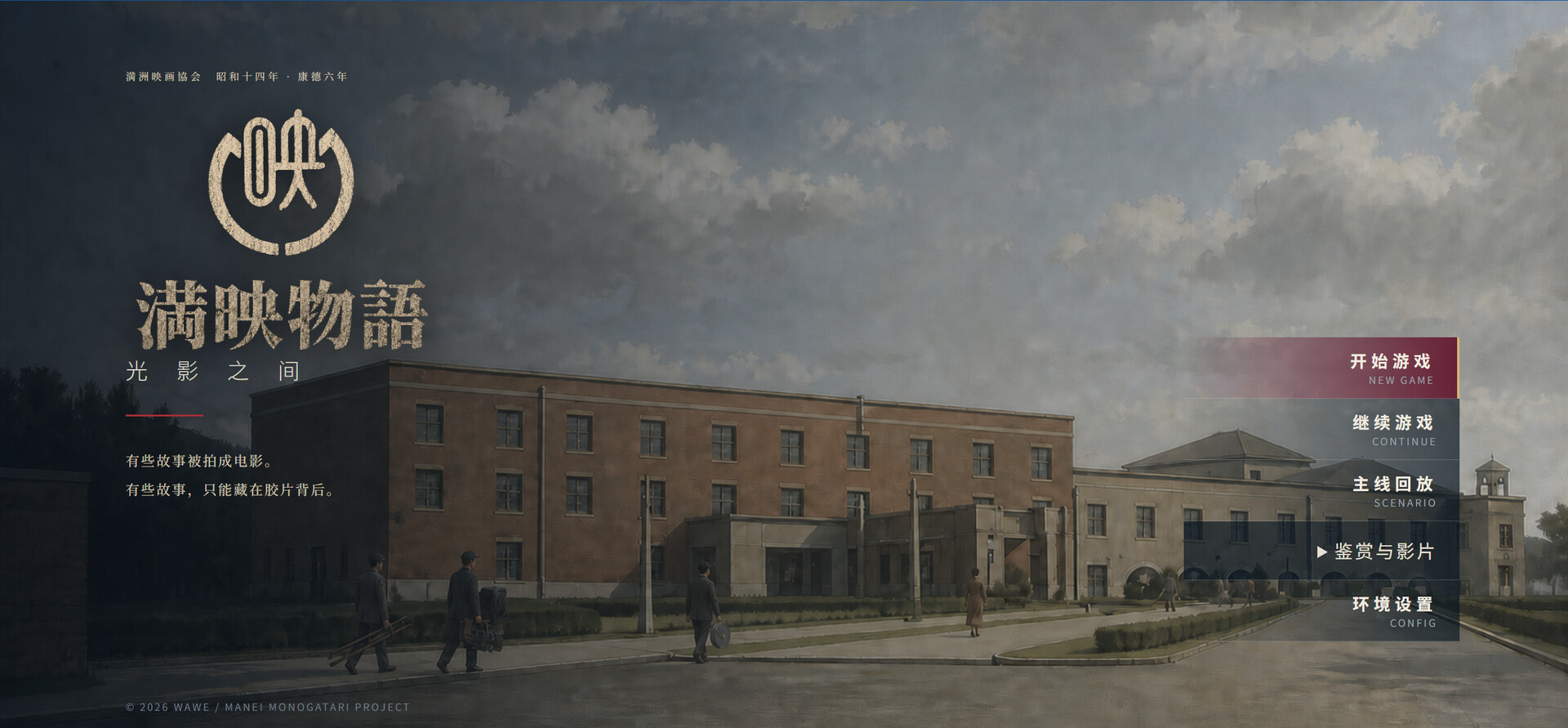
Xinjing, 1939.
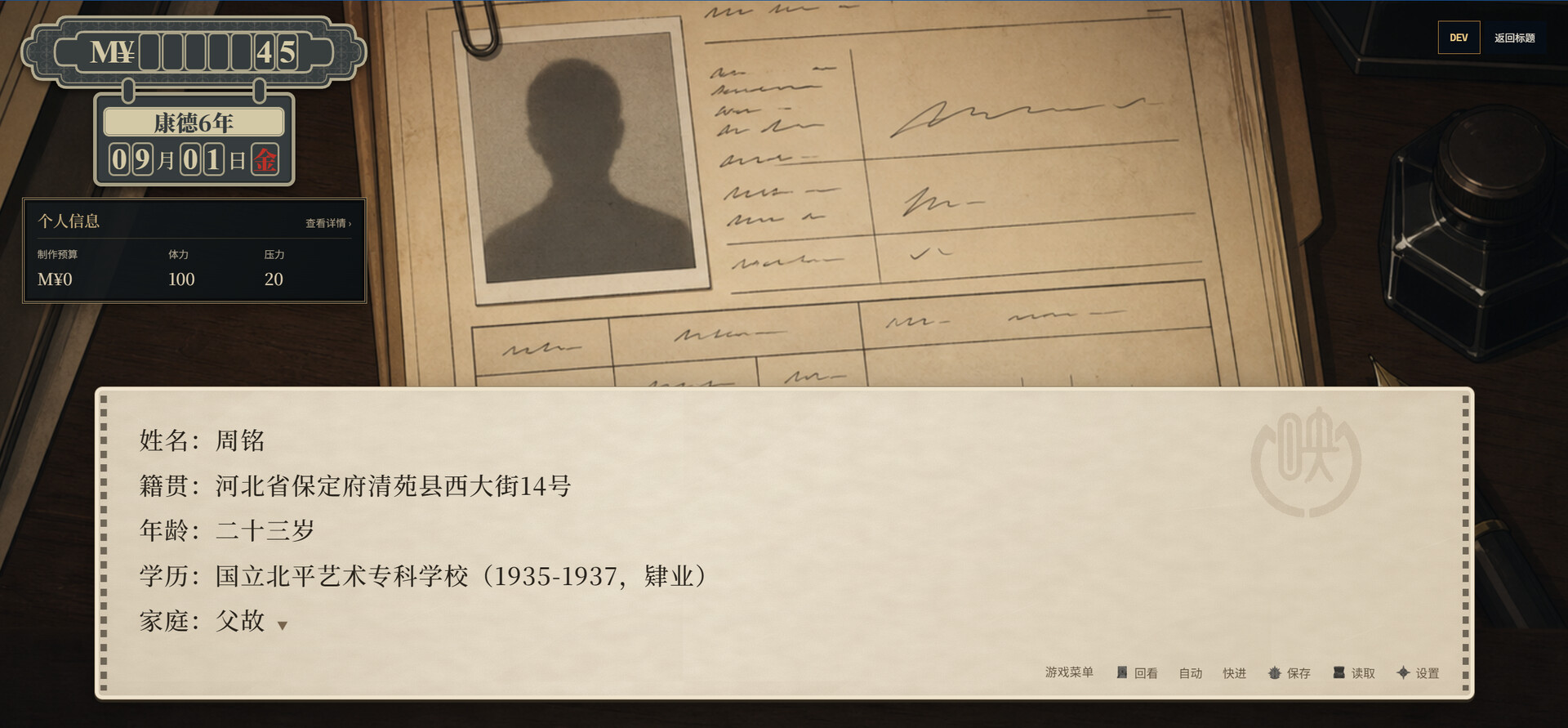
A transfer order takes a young man named Zhou Ming from a labor camp to the Manchuria Film Association—the studio known as Man’ei. He is given a small room and a trainee’s job. But no one tells him who arranged his transfer, or why.
At first, he sorts documents and runs errands, sometimes stealing a glimpse through the studio doors. Gradually, he meets the people behind the camera, handles scripts and film, and begins to imagine making a picture of his own.
But here, a film is never just a film.
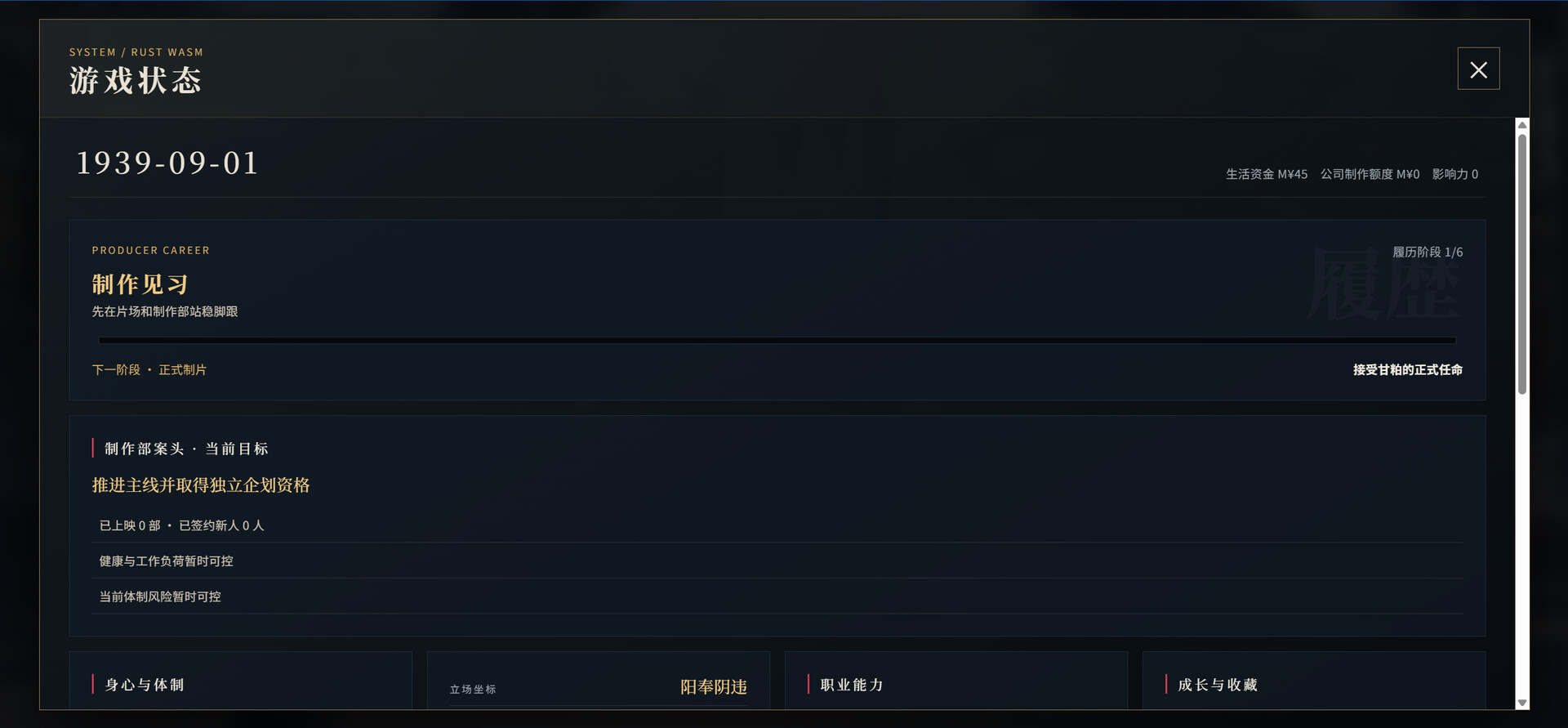
MAN’EI MONOGATARI is a historical adventure combining a branching narrative with daily planning and film production. Through Zhou Ming’s eyes, work and live inside a film studio in a turbulent era, and find your place among the people who keep it running.
Your Week, Your Decisions
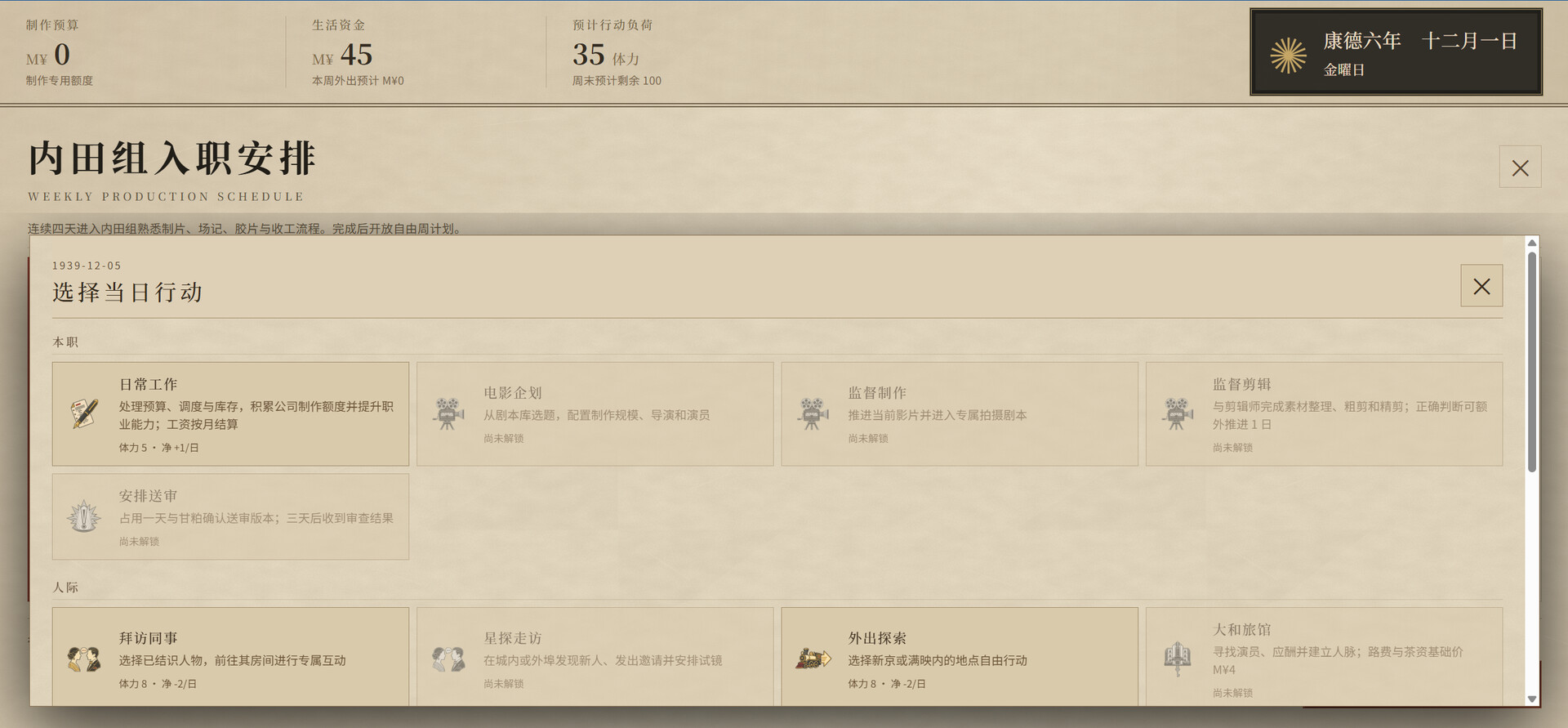
Work, film, visit someone, go out, or rest. Your time, stamina, and living funds are limited, and production does not stop because you are tired. Stay on set to finish a task, or leave to keep an appointment? Everyday decisions shape the people you meet and the opportunities that follow.
Make a Film of Your Own
Choose a project, assemble a crew, and take part in filming, editing, censorship review, and release. Budget shortages, staffing decisions, creative disagreements, and official demands can all change the film you set out to make. Completing it is only the first step. Beyond the studio gates, an audience—and the box office—awaits.
Meet the People Behind the Screen
Directors, actors, camera operators, and office workers each have their own responsibilities, loyalties, and difficulties. Work alongside them, disagree with them, and discover the lives behind their titles. Some relationships grow through a shared production. Others begin with a quiet conversation after work.
Decide What Is Worth Preserving
Follow an instruction, or argue for another approach. Ask about someone’s secret, or leave it unspoken. Not every decision has a clear right answer. Your choices affect your relationships, the fate of your films, and the ending of your story.
Historical Setting
Set in northeastern China under Japanese colonial rule, the game combines the historical Man’ei studio, real figures, and period events with fictional storytelling. The protagonist, dialogue, and some episodes are invented; the game is not a complete reconstruction of history. It includes depictions of and references to war, forced labor, violence, death, and political repression.
A camera can record a person’s face or a city street. It can also turn away from something happening right in front of it.
When that camera is in your hands, what will you film?