Über LifeStock
You are one of several gods competing in the Divine Exchange, a ruthless market where mortal lives become tradable assets.
Beneath you lies a medieval village full of people who have no idea they are being watched. They work, marry, raise children, change jobs, commit crimes, worship different gods, fall ill, leave on expeditions and die.
Your task is not to save them. It is to understand them, trade their futures and finish the match with more Souls than your rivals.
You are a god. Mortal lives are stocks.
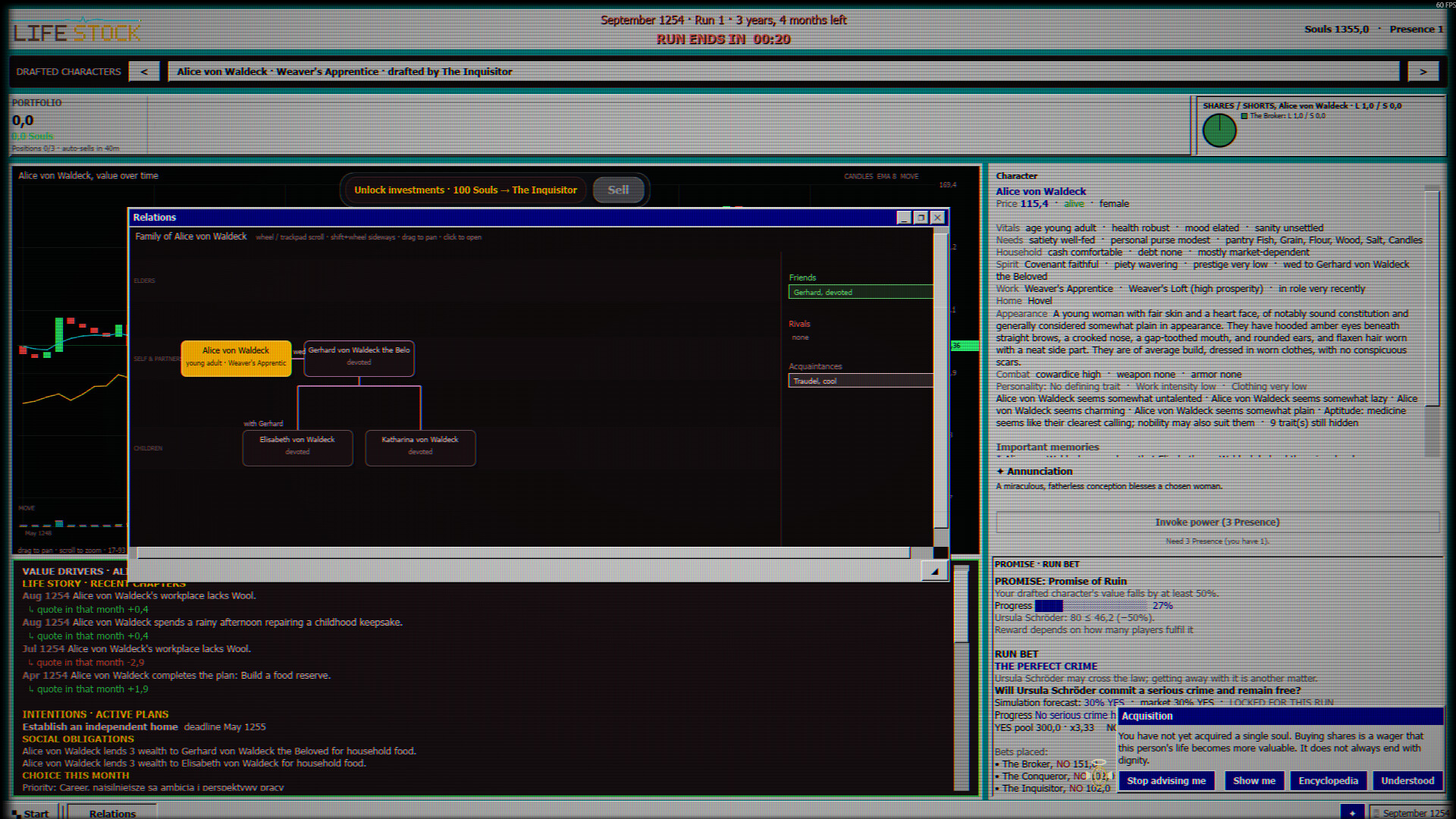
Every villager is part of a living simulation. Their value depends on health, wealth, career, family, relationships, faith, reputation and recent events.
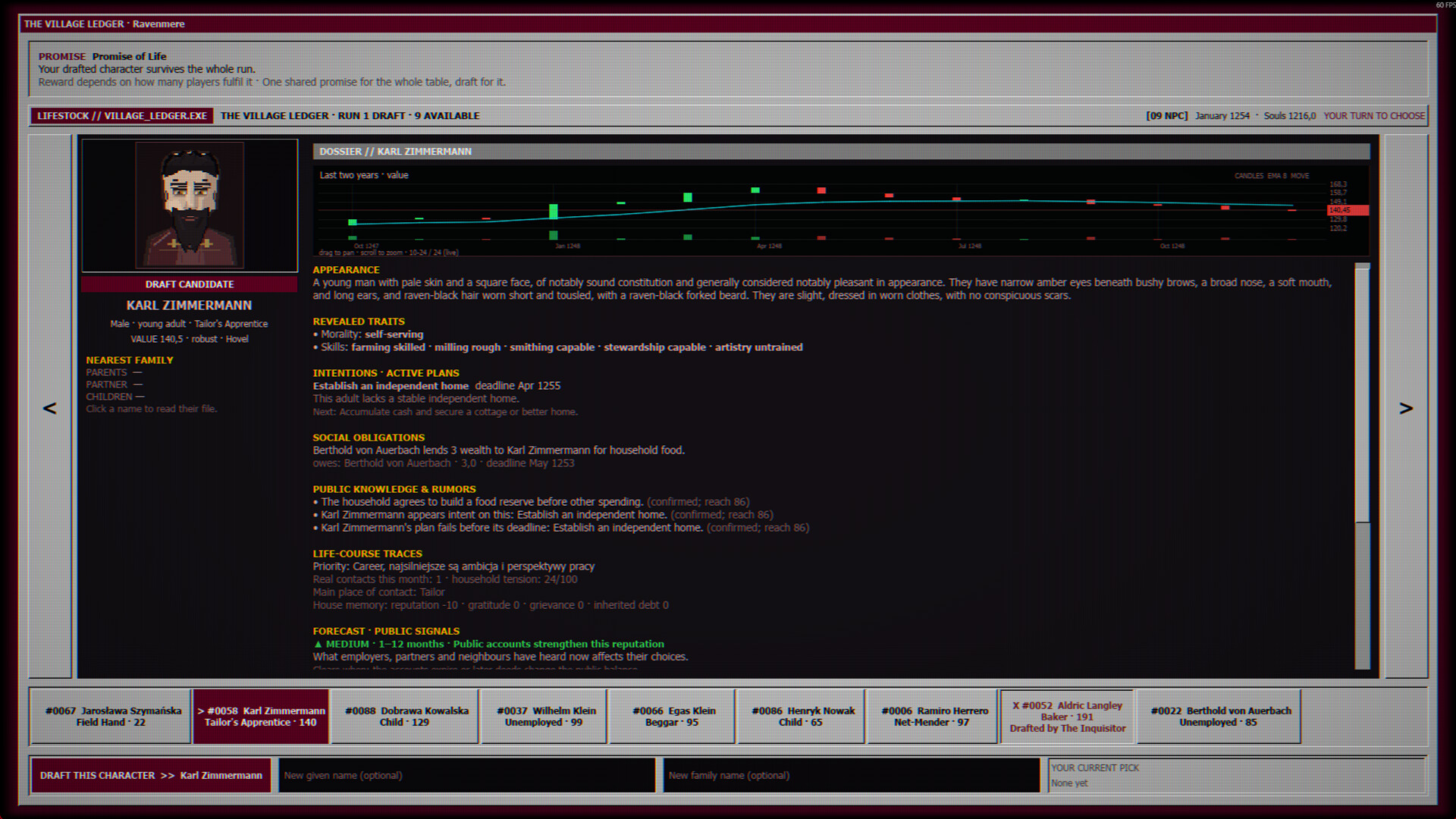
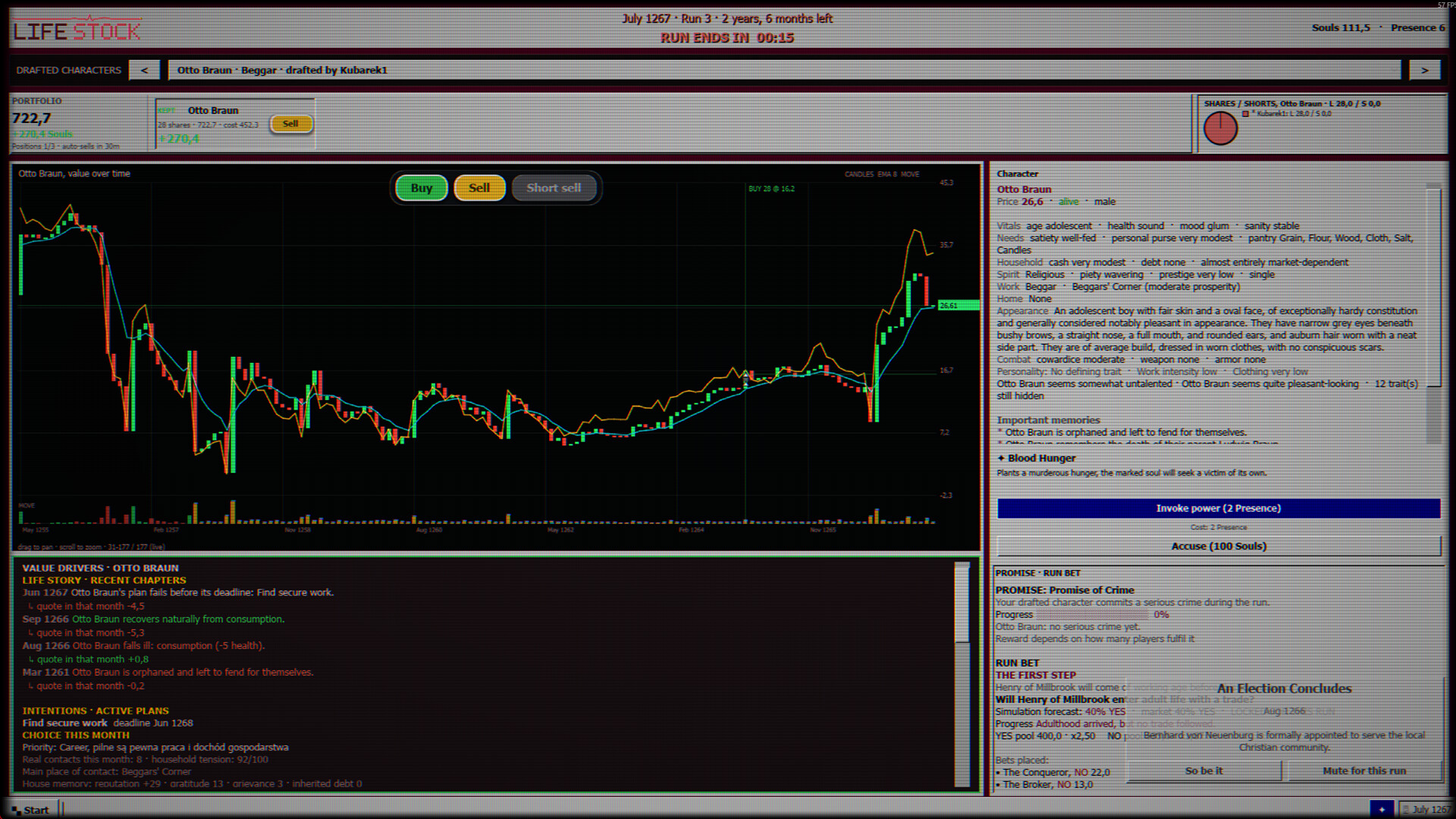
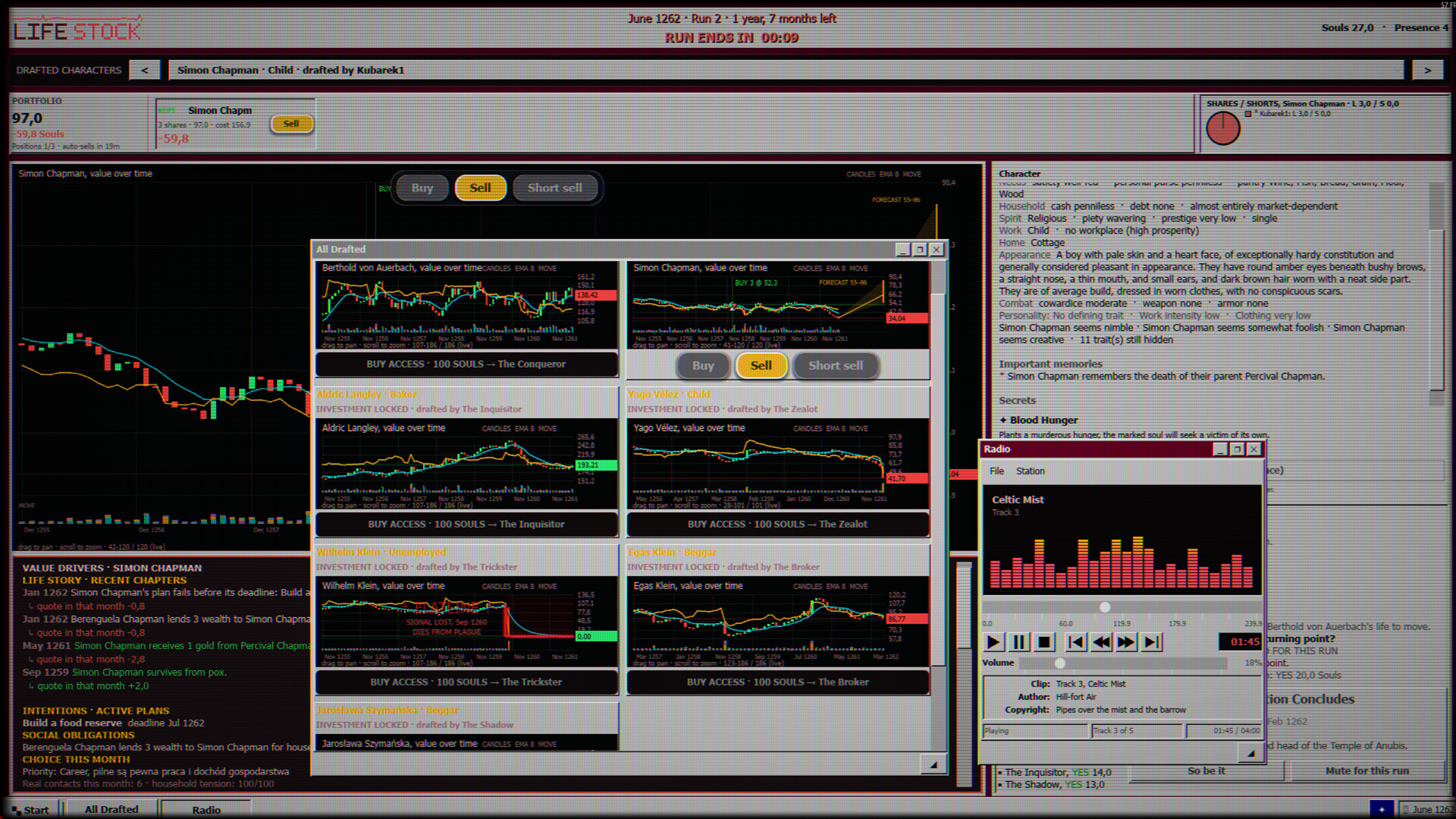
At the start of each five-year run, you draft villagers and study their dossiers. You can see their family, career, market history, recent events and selected traits. Once the draft is complete, the market opens.
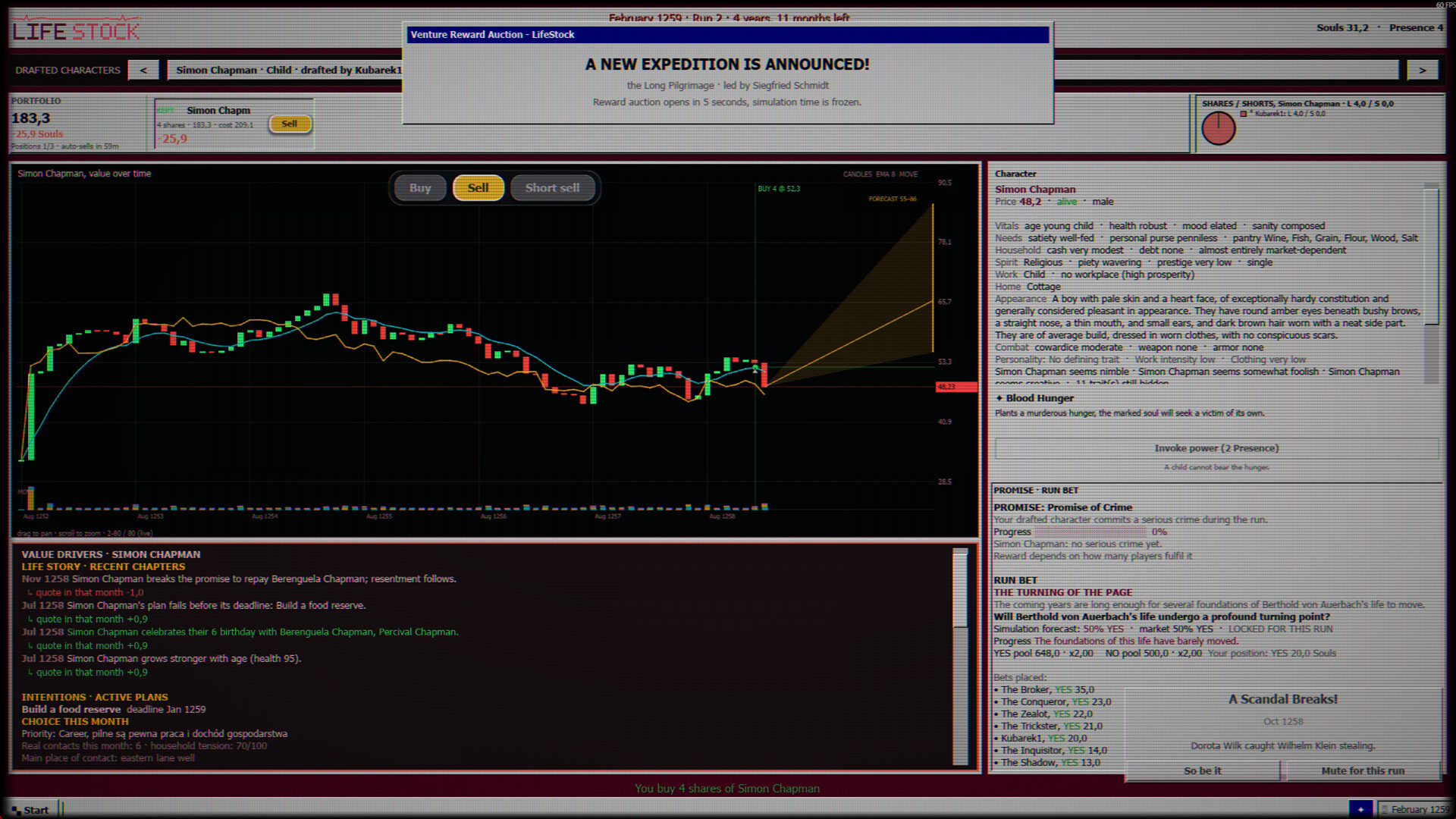
Buy shares in a promising life. Sell before the situation turns bad. Short a villager whose future looks worse than the market believes. Prices respond to events in the village and to the decisions of every player at the table.
A promotion can make someone valuable. A scandal can destroy their reputation. An illness can change the outlook of an entire household. A death closes the market completely.
A village that keeps moving
The simulation does not wait for the players. Villagers work, court one another, marry, have children, inherit property, join churches and cults, fall into debt, commit crimes, face justice and compete for public office.
The village has its own economy, food supply, workplaces, institutions and changing religious balance. Harvests fail. Gangs form. Elections change the government. Families grow old and split apart.
Every run produces different stories. Events are generated by the simulation, and market movements can be traced back to things that happened to real people in the village.
Forecast the future
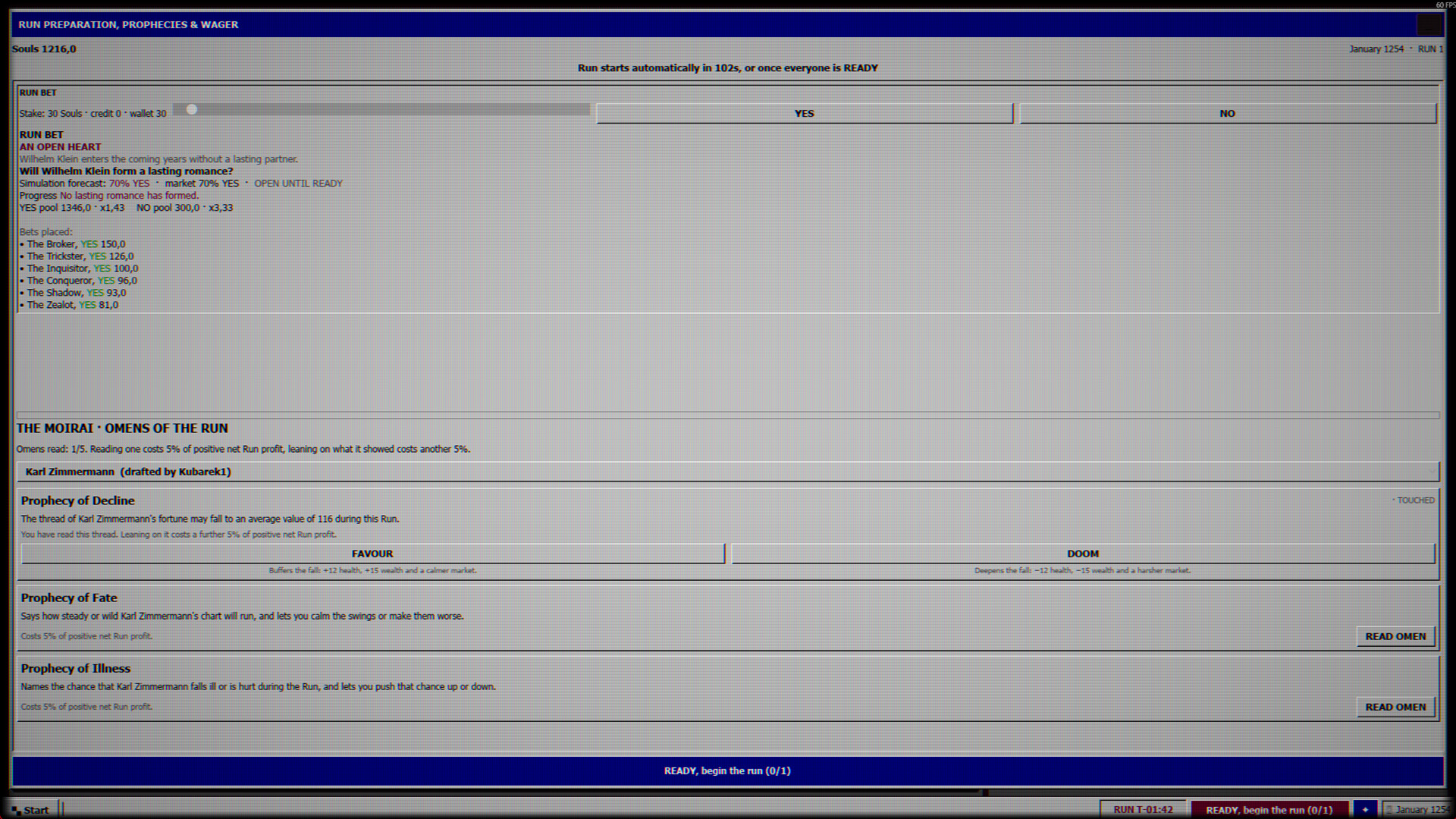
Before each run, the Fates offer forecasts about the drafted villagers. You may learn about possible death, illness, career changes, family events, volatility and future value.
These forecasts are based on repeated simulations of the same situation. They are useful, but they are not guarantees.
You can also spend Presence to interfere with the lives you are watching. Protect a villager, push them toward a new decision or make their situation worse. Other players may notice that fate was changed, but they will not know who caused it or whether the result was a blessing or a curse.
Asymmetric gods with different strategies
The gods are not interchangeable. Each one has a different cult, starting position, strategic power, military identity and divine intervention.
The current roster includes
- The Almighty relies on authority, order and miracles.
- Anubis protects the dead and can return fallen soldiers to the battlefield.
- Baal turns violence, fear and disorder into power.
- Cthulhu works through madness, dreams and hidden influence.
- Thor favours direct military strength and heroic trials.
- Quetzalcoatl uses beauty, creativity and cultural influence.
More gods may join the Divine Exchange in future updates, each bringing new powers, cult mechanics and ways to approach the village.
Choosing a god changes how you approach both the village and the War of Gods. Two players may choose the same god, but their cults, colours, territories, believers and economies remain separate.
Build your cult
Between trading runs, develop your cult and compete for believers. You may lead a lawful church or an illegal cult. Convert households, support priests, manage your treasury and fight for the position of state religion.
Your influence inside the village affects more than faith. It changes elections, public opinion, access to resources and the number of orders available during the War of Gods.
The War of Gods
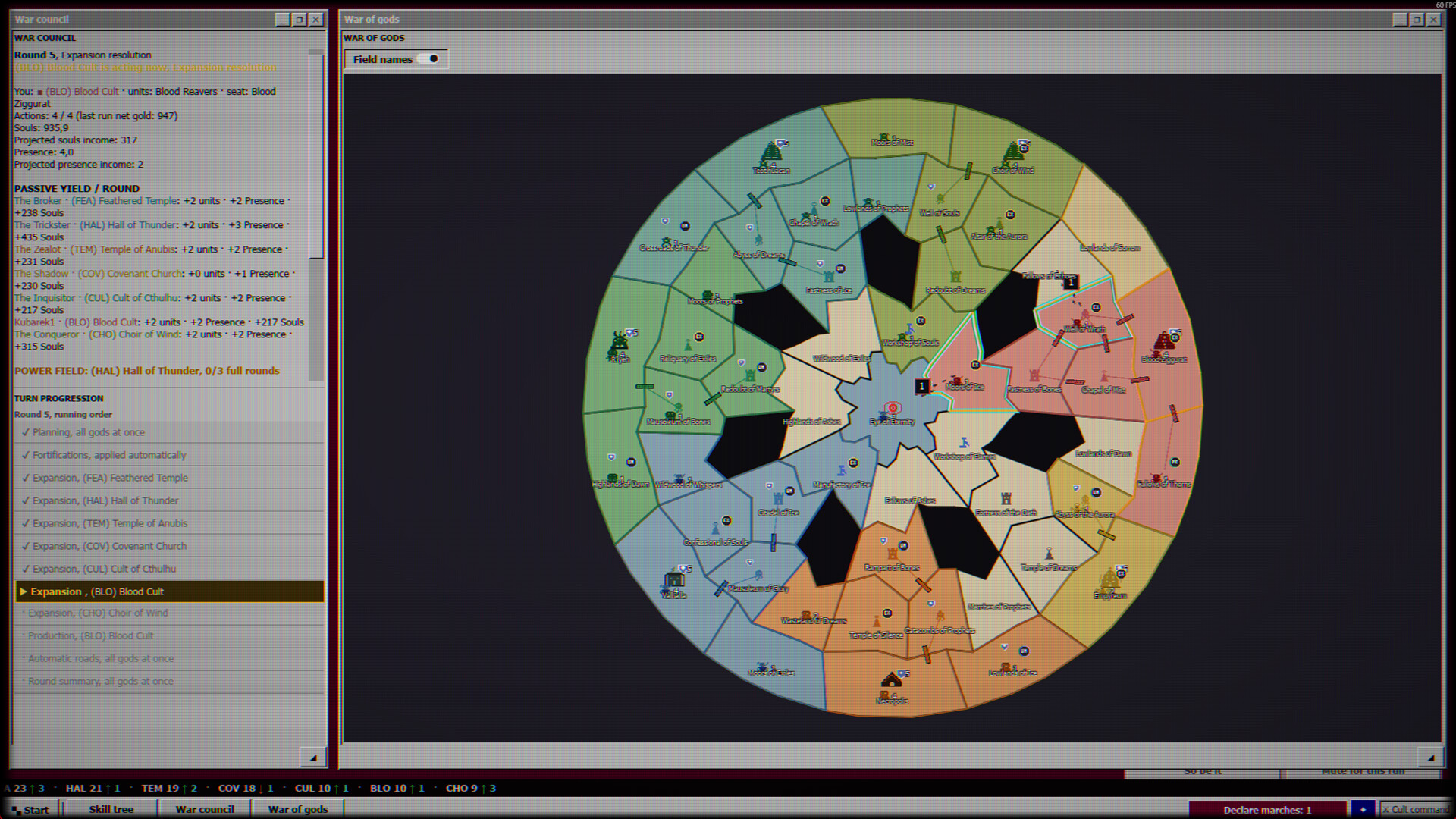
Between runs, the village clock stops and the game becomes a strategic battle for territory.
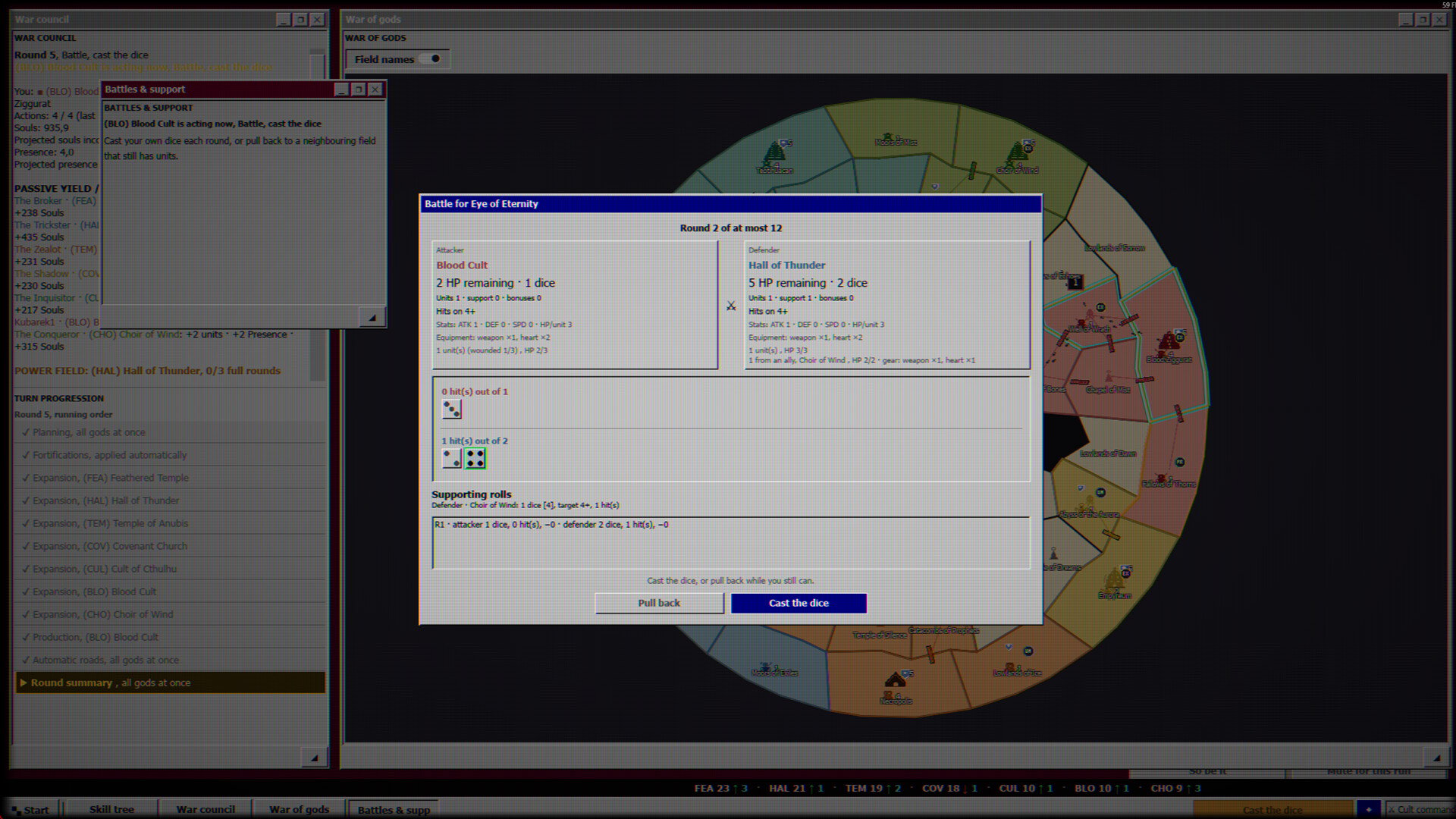
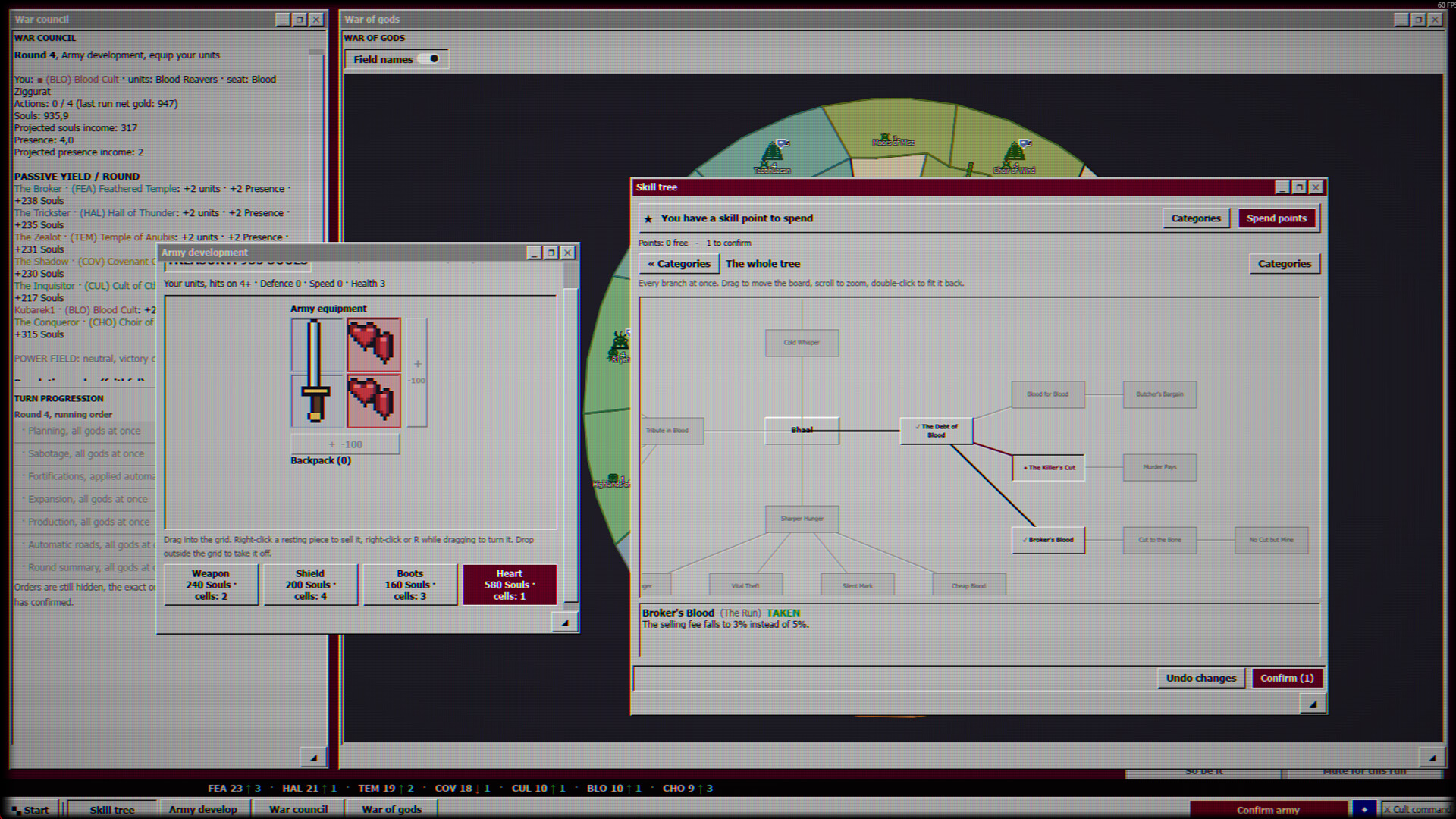
Command armies on a territory map. Issue hidden orders, fortify your borders, expand into neutral fields, sabotage rivals and fight for the areas that generate Souls and Presence.
Equip your forces and decide how to spend your limited resources. Expansion, defence, production and sabotage all have a place, but every order creates a risk.
Lose your divine seat and your cult collapses. Hold it, and the village becomes the foundation for your next advantage.
Expeditions and royal levies
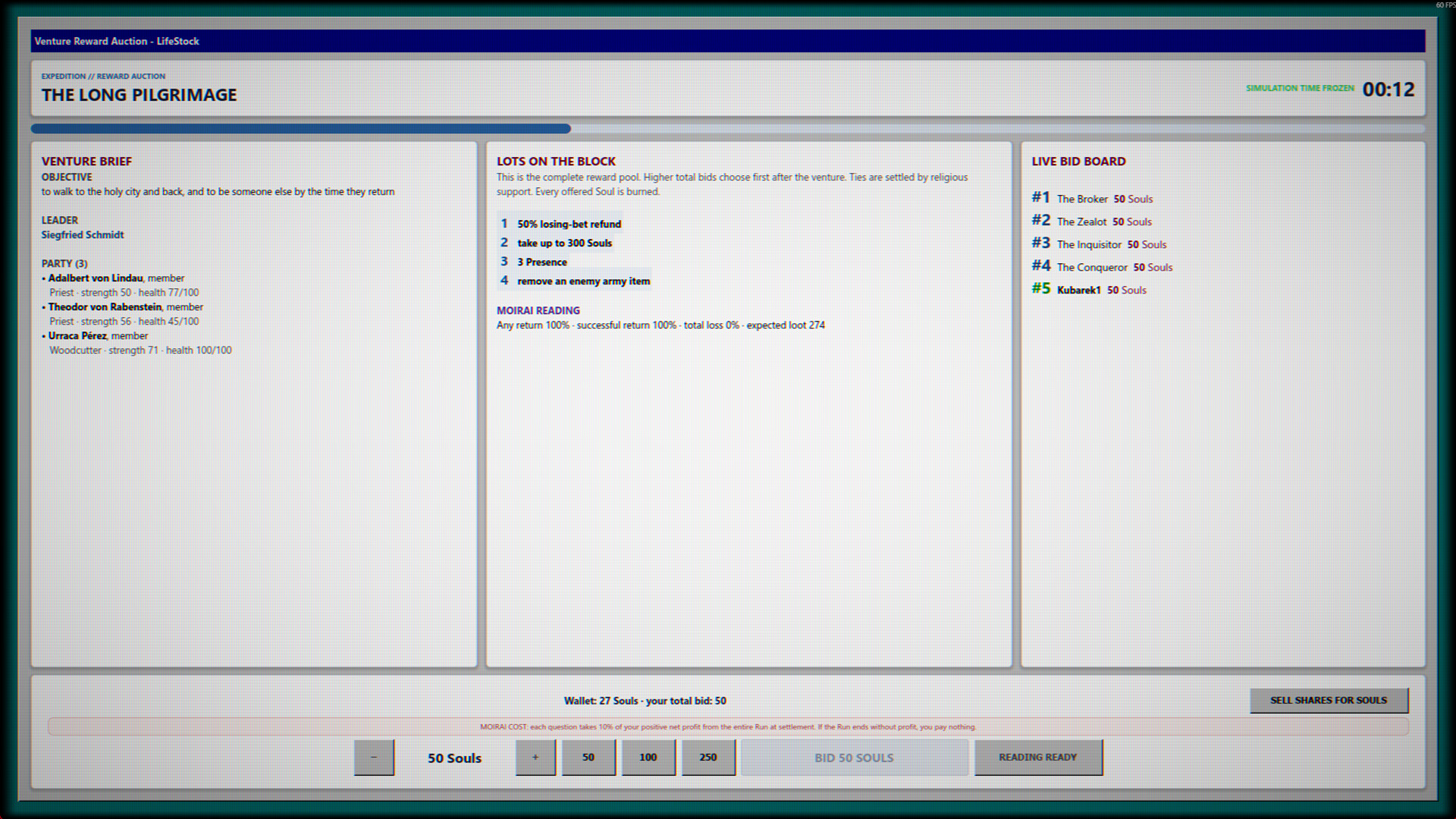
Some villagers leave the village on expeditions or royal campaigns. Their journey continues for months and can involve battles, sickness, supply problems, desertion and death.
If anyone returns, the survivors may bring back wealth, influence or other rewards. Players compete in a live auction for the first choice of what comes home.
Features
- Peer-to-peer multiplayer through Steam Networking
- 2–10 players with bots available to fill empty seats
- Draft, buy, sell and short mortal lives
- A living medieval village simulation
- Six asymmetric gods with different powers and strategies
- Cult management, religious influence and public institutions
- The strategic War of Gods between trading runs
- Territory control, hidden orders and army equipment
- Forecasts based on repeated simulations
- Divine powers that alter villagers’ lives
- A written chronicle describing the history of the village
- Four-path skill tree
- English and Polish localization
- Save, resume and reconnect during a match
- Fictional Souls currency only
- No real-money gambling, cash-out or player-to-player currency trading